
# Understanding the Importance of the 3U Server Heatsink 107-0033-1 in Data Centers
In today’s technologically driven world, data centers serve as the backbone of digital operations, powering everything from cloud computing to enterprise applications. Within these sprawling facilities, the efficient operation and longevity of servers are paramount. One critical yet often overlooked component that plays a vital role in maintaining server performance is the heatsink. Specifically, the **3U server heatsink 107-0033-1** has emerged as a significant element in ensuring optimal thermal management in high-performance servers. This article delves deep into understanding the importance of this particular heatsink within data centers, exploring its design, functionality, and impact on overall data center efficiency.
---
## The Role of Thermal Management in Data Centers
Managing temperature effectively within data centers is a complex challenge. Servers generate substantial heat during operation, and without proper dissipation mechanisms, this heat can lead to component failure, reduced performance, and increased operational costs. Thermal management ensures that servers operate within safe temperature ranges, thereby enhancing reliability and extending hardware lifespan.
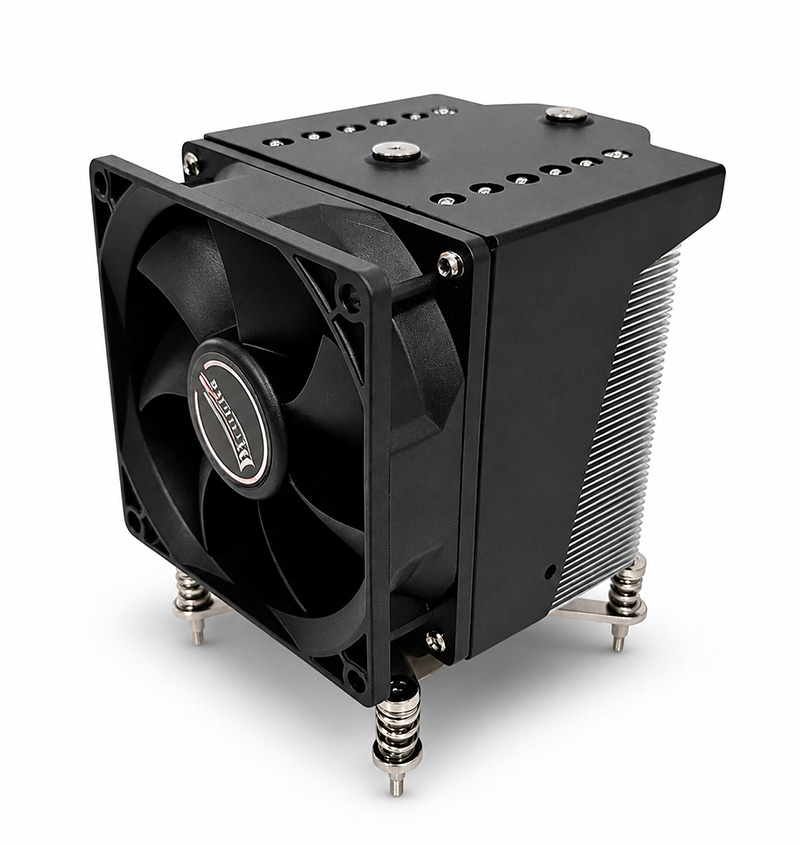
The **heatsink** serves as the frontline defense in this thermal regulation process. It absorbs and dissipates heat away from critical components such as CPUs, GPUs, and memory modules. Among various heatsink designs, the 3U server heatsink 107-0033-1 stands out for its tailored application in mid-sized rack servers, offering a blend of efficient heat dissipation coupled with space-saving design.
---
## Overview of the 3U Server Heatsink 107-0033-1
The **3U server heatsink 107-0033-1** is engineered to fit within the height constraints of 3U rack-mounted servers, which are typically about 5.25 inches tall. This form factor is crucial for data centers that need to maximize the number of servers per rack without compromising airflow or cooling efficiency.
### Key Features:
- **Efficient Heat Dissipation:** Designed with advanced fin structures and optimized surface area to maximize heat transfer.
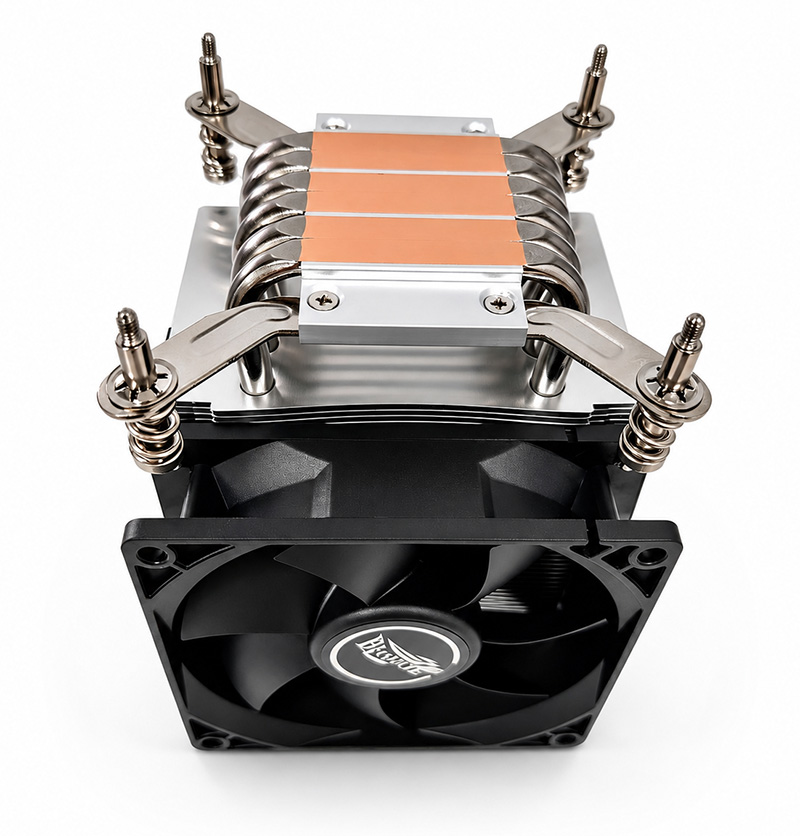
- **Material Composition:** Often made from high-conductivity materials such as aluminum or copper to ensure rapid thermal conduction.
- **Compatibility:** Tailored for specific server models yet versatile enough to suit a range of CPUs and environments.
- **Compact Design:** Balances size constraints with performance, enabling dense server deployment.
---
## Why the 3U Server Heatsink 107-0033-1 is Crucial for Data Centers
### 1. **Ensures Optimal Server Performance**
Servers under thermal stress tend to throttle processing speeds to prevent overheating, leading to decreased performance. The 3U server heatsink 107-0033-1 efficiently removes excess heat, allowing processors to maintain peak performance. This consistent performance is essential for data centers running mission-critical applications that demand low latency and high throughput.
### 2. **Prolongs Hardware Lifespan**
Excessive heat accelerates wear and tear on electronic components. By maintaining optimal operating temperatures, the heatsink protects sensitive parts from premature failure. This not only reduces downtime but also lowers maintenance and replacement costs — a significant consideration for large-scale data centers managing thousands of servers.
### 3. **Supports High-Density Server Deployments**
Data centers constantly strive to improve rack density to optimize space utilization. The compact nature of the 3U server heatsink 107-0033-1 makes it possible to pack more servers into each rack without risking thermal issues. Its design facilitates adequate airflow, preventing hotspots and ensuring uniform cooling across server units.
### 4. **Energy Efficiency and Cost Savings**
Effective cooling translates directly to energy savings. When servers run cooler, cooling systems such as CRAC (Computer Room Air Conditioning) units and fans do not have to work as hard, reducing the overall power consumption of the data center. The 3U server heatsink contributes to this by efficiently managing heat at the source, helping data centers achieve better PUE (Power Usage Effectiveness) ratios.
---
## Technical Considerations in Using the 3U Server Heatsink 107-0033-1
### Design Parameters: Margin, Padding, and Box-Sizing Analogy
Drawing an analogy from web design principles such as **margin**, **padding**, and **box-sizing**, the physical design of the heatsink must balance clearances and thermal contact areas. Just as margin and padding control spacing and content flow on a webpage, the heatsink’s fins and base must be designed to optimize airflow and heat transfer without interfering with adjacent components.
- **Margin:** In physical terms, the heatsink needs adequate clearance around it to allow airflow (analogous to CSS margin).
- **Padding:** The thickness and layering of fins act like padding, providing the necessary surface area for heat to spread.
- **Box-sizing:** Just as box-sizing determines how an element’s size is calculated, the heatsink’s dimensions must be precisely controlled to fit within the 3U server’s spatial constraints.
### Material and Surface Treatments
The thermal conductivity of the heatsink’s material is analogous to **font-family** in CSS — it defines the foundational characteristics. Aluminum is common due to its balance of cost and conductivity, while copper offers superior performance but at higher cost and weight. Surface treatments, akin to **background color (#f4f8ff)** and **color (#111)** in CSS that affect visual appeal, here influence emissivity and corrosion resistance, impacting long-term thermal performance.
### Integration with Server Chassis: Page Wrapper and Container Concepts
Just as a **page wrapper** and **container** in CSS structure content, the heatsink integrates with the server chassis to create an optimized thermal environment. The server’s internal layout (max-width 1180px, margin auto) parallels the heatsink’s alignment within the chassis, ensuring that airflow pathways are unobstructed and ambient air reaches the heatsink efficiently.
---
## Environmental Impact and Sustainability
With growing emphasis on sustainable data center operations, components like the 3U server heatsink 107-0033-1 contribute significantly to reducing carbon footprints. Efficient thermal management means less reliance on external cooling infrastructure, leading to lower greenhouse gas emissions associated with electricity generation.
Moreover, extending hardware lifespan through effective cooling reduces electronic waste, aligning with circular economy principles. Data centers adopting cutting-edge heatsink technologies demonstrate commitment to environmental stewardship without sacrificing performance.
---
## Best Practices for Implementing the 3U Server Heatsink in Data Centers
### 1. **Regular Maintenance and Cleaning**
Dust accumulation can impair heatsink performance by blocking airflow. Scheduled cleaning using anti-static tools helps maintain optimal heat dissipation.
### 2. **Thermal Interface Material (TIM) Optimization**
Proper application of thermal paste or pads between the CPU and heatsink base ensures minimal thermal resistance, much like ensuring correct padding in CSS layout to prevent content overlap.
### 3. **Monitoring and Thermal Profiling**
Using sensors and monitoring software to track server temperatures helps identify potential issues before they escalate, allowing proactive adjustments to cooling strategies.
### 4. **Compatibility Checks**
Ensuring the heatsink model matches the server’s processor type and chassis design prevents installation issues and guarantees peak performance.
---
## Conclusion
The **3U server heatsink 107-0033-1** is more than just a passive component; it is a cornerstone of reliable, efficient, and high-performing data center operations. Its specialized design addresses the unique challenges posed by compact servers, facilitating enhanced thermal management that benefits performance, longevity, and energy efficiency.
As data centers continue to scale and evolve, investing in quality heatsinks alongside holistic cooling strategies will remain crucial. Understanding the technical nuances and operational impacts of components like the 3U server heatsink empowers data center managers and IT professionals to build resilient infrastructures capable of supporting the digital world's future demands.
---
By appreciating the integral role of the 3U server heatsink 107-0033-1, organizations can optimize their data centers not just for today’s workloads but also for tomorrow’s innovations.