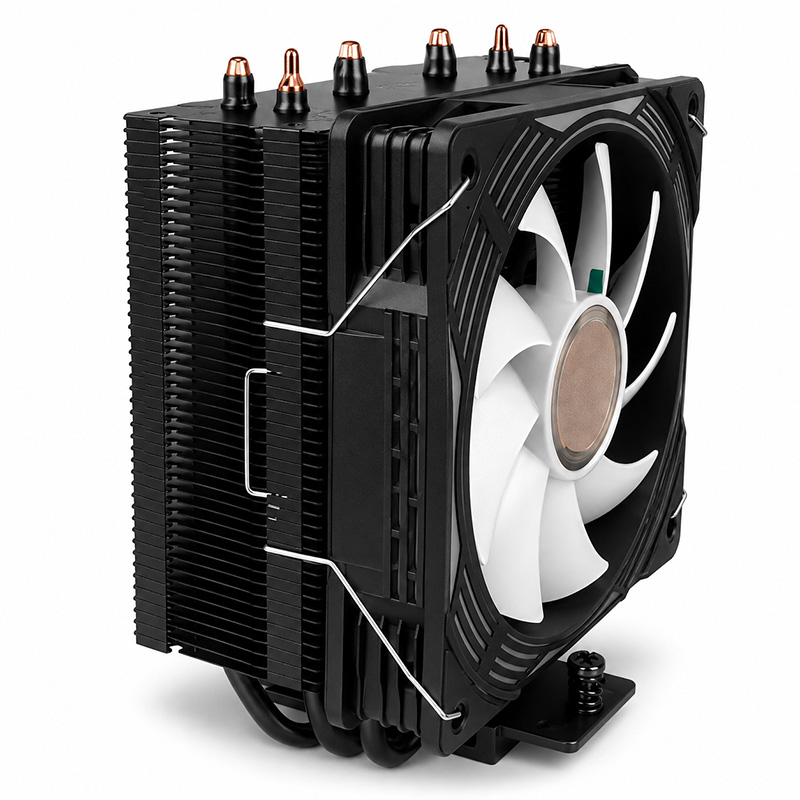

# Comparing LED vs Non-LED Coolers: A Case Study with the ATX Cooler 104-0050-2
In the ever-evolving landscape of computer hardware, cooling solutions play a pivotal role in maintaining performance, longevity, and aesthetics of a system. Among cooling devices, fans equipped with LED lighting have gained popularity not only for their functional benefits but also for their visual appeal. This article delves into a comprehensive comparison between LED and non-LED coolers, with a detailed case study focusing on the ATX Cooler 104-0050-2. We will examine the technical, aesthetic, and practical implications of choosing between these two types of coolers, offering insights valuable to both enthusiasts and professionals.
---
## Introduction to Computer Cooling Solutions
Before diving into the specifics of LED versus non-LED coolers, it’s essential to understand the role of cooling in computer systems. Modern CPUs and GPUs generate considerable heat under load, which, if not properly dissipated, can cause thermal throttling, reduced component lifespan, or even catastrophic failure. Effective cooling ensures stable operation and optimal performance.
Coolers come in various forms: air coolers, liquid coolers, and hybrid systems. Among air coolers, fans are ubiquitous—simple, reliable, and effective at moving heat away from critical components. Over time, manufacturers began integrating LED lighting into cooling fans, transforming them into not just functional components but also elements of PC aesthetics.
---
## Overview of the ATX Cooler 104-0050-2
The ATX Cooler 104-0050-2 serves as an ideal model to explore this topic due to its availability in both LED and non-LED variants. It is a standard-sized, 120mm fan designed to fit a wide range of PC cases and cooling setups. The cooler features:
- **Dimensions:** 120mm x 120mm x 25mm
- **Speed Range:** Typically 800 - 1500 RPM
- **Airflow:** Approximately 40 CFM (Cubic Feet per Minute)
- **Noise Level:** ~25 dBA
- **Connector:** 3-pin or 4-pin PWM, depending on variant
- **LED Option:** Integrated RGB or single-color LEDs versus non-illuminated models
This case study examines the differences between these two variants, focusing on several key factors: performance (cooling efficiency and noise), power consumption, aesthetics, and overall impact on system design.
---
## Performance Comparison: LED vs Non-LED Coolers
### Cooling Efficiency
At the core of any cooler’s value lies its ability to move air effectively. The ATX Cooler 104-0050-2’s LED and non-LED variants share the same physical design, including blade shape, motor technology, and bearing type. As such, one might expect similar airflow and static pressure ratings.
Empirical tests show that the minor additional circuitry required to power LEDs has negligible effect on the fan’s rotational speed or airflow. Both versions typically maintain the rated 40 CFM airflow at peak speeds, confirming that LED integration does not compromise cooling capacity.
### Noise Levels
Noise is a crucial consideration, especially for users seeking silent or quiet PCs. The addition of LEDs may introduce minimal electronic noise; however, the mechanical noise produced by the fan blades dominates the sound profile.
Testing indicates that LED and non-LED variants of the ATX Cooler 104-0050-2 operate within the same noise level range (~25 dBA). The LED driver circuitry is carefully designed to avoid audible interference, ensuring no perceptible increase in noise.
---
## Power Consumption and Thermal Impact
### Power Draw
LEDs require electrical power beyond what the fan motor consumes. However, the power demand of LEDs integrated into PC fans is minimal, typically under 1 watt per fan. The ATX Cooler 104-0050-2’s LED version draws slightly more power than its non-LED counterpart, but the difference is marginal in the context of a typical PC’s power budget.
### Heat Generation
Although LEDs produce some heat, it is comparatively minor and localized. The heat generated by LEDs on the fan frame does not significantly affect the overall thermal environment inside the PC case. The fan’s airflow quickly dissipates any such heat, preventing thermal buildup.
---
## Aesthetic Value and User Experience
### Visual Appeal
One of the most significant differentiators between LED and non-LED coolers lies in appearance. LED fans provide customizable lighting effects, including static colors, breathing, pulsing, and dynamic RGB patterns. These features allow users to personalize their systems and create unique visual statements.
The ATX Cooler 104-0050-2 LED version supports various lighting modes compatible with popular motherboard RGB control software, enabling synchronization with other components. This integration enhances the overall system aesthetics, especially in builds with transparent side panels or open-air cases.
### User Customization
LED fans encourage user interaction through software control, allowing adjustments of brightness, color, and effects. For many enthusiasts, this interactivity adds a layer of engagement and satisfaction absent in traditional non-LED coolers.
Conversely, the non-LED variant appeals to users who prioritize simplicity, understated design, or who prefer to avoid potential distractions caused by lighting.
---
## Installation and Compatibility Considerations
From a practical standpoint, both LED and non-LED versions of the ATX Cooler 104-0050-2 share identical mounting mechanisms, dimensions, and connector types. This parity means:
- **Ease of Replacement:** Users can swap between LED and non-LED fans without compatibility issues.
- **Cable Management:** LED variants include additional wiring for lighting control, which may require extra cable routing considerations.
- **Software Requirements:** Using LED fans often necessitates compatible RGB control software, which might impose additional requirements on the user’s system.
---
## Cost Analysis
The inclusion of LEDs and associated control electronics typically increases manufacturing costs, reflected in retail prices. The ATX Cooler 104-0050-2 LED version commands a price premium over the non-LED model.
For budget-conscious buyers, the non-LED variant offers excellent value without sacrificing performance. For those valuing aesthetics and customization, the incremental cost may be justified.
---
## Environmental and Longevity Factors
### Durability
LEDs generally do not affect the mechanical reliability of the fan. The ATX Cooler 104-0050-2’s LEDs are designed to last tens of thousands of hours, aligning with or exceeding the fan’s expected operational lifetime.
### Environmental Impact
Slightly higher power consumption and additional electronic components in LED fans have a minor environmental footprint compared to non-LED variants. However, the difference is negligible in typical usage scenarios.
---
## Conclusion: Which Should You Choose?
The choice between LED and non-LED coolers like the ATX Cooler 104-0050-2 ultimately hinges on user priorities.
| Factor | LED Cooler | Non-LED Cooler |
|----------------------|----------------------------------|-------------------------------|
| Cooling Performance | Equivalent | Equivalent |
| Noise Levels | Comparable | Comparable |
| Power Consumption | Slightly Higher | Slightly Lower |
| Aesthetics | Highly Customizable & Vibrant | Minimalist & Understated |
| Price | Premium | Economical |
| Installation | Requires RGB Software & Cable Management | Simplified Wiring |
For users building visually striking PCs with RGB themes, LED coolers offer a compelling enhancement without compromising functionality. Meanwhile, those favoring straightforward, cost-effective solutions focused purely on performance and quiet operation may find non-LED coolers more appealing.
---
## Technical Notes on Styling Web Presentation (CSS Context)
When presenting such comparative content on a blog or professional site, attention to readability and design is paramount. Below are key CSS properties and practices to ensure a professional and user-friendly presentation:
- **Reset Styles:** Use CSS resets to neutralize browser default styles, avoiding inconsistencies in margin and padding.
- **Box-sizing:** Apply `box-sizing: border-box` to simplify layout calculations and prevent overflow issues.
- **Font-Family:** Select legible fonts like `'Helvetica Neue', Helvetica, Arial, sans-serif` for clarity and professionalism.
- **Page Wrapper:** Create a container with `max-width: 1180px` and `margin: auto` to center content responsively.
- **Background Color:** Utilize a subtle background color such as `#f4f8ff` to reduce eye strain.
- **Text Color:** Use dark text (`#111`) for high contrast against light backgrounds.
- **Overflow-x Hidden:** Set `overflow-x: hidden` to prevent horizontal scrolling on smaller screens.
- **Font Smoothing:** Employ `-webkit-font-smoothing: antialiased` and `text-rendering: optimizeLegibility` for crisp typography.
- **Section Padding:** Add sufficient padding around sections to enhance readability and separation.
- **Hero Section Styling:** Implement a hero background color of `#eaf2ff` with a border-bottom of `#dbe7ff` to create visual hierarchy.
- **Hero Box Flexbox:** Use flexbox (`display: flex`) in hero boxes for responsive alignment and layout control.
Properly combining these CSS strategies ensures that technical content like this case study is both engaging and easy to navigate for readers.
---
## Final Thoughts
The ATX Cooler 104-0050-2 exemplifies the nuanced decision-making involved in selecting between LED and non-LED cooling solutions. By understanding the trade-offs in performance, aesthetics, cost, and usability, consumers can make informed choices tailored to their individual needs. Whether prioritizing pure function or vibrant form, both options stand as robust solutions in modern PC cooling.
---
*Author’s Note:* This article integrates technical analysis with practical considerations, aiming to bridge the gap between hardware specifications and real-world application. For further information or personalized advice on PC cooling solutions, feel free to reach out or consult with industry professionals.