
# Technical Specifications Breakdown: What Makes the Server Heatsink 2U 104-0046-1 Stand Out?
In the realm of data centers and high-performance computing, effective thermal management is critical to maintaining system reliability and optimizing performance. Among the array of cooling solutions available, the **Server Heatsink 2U 104-0046-1** has garnered attention for its advanced design and robust capabilities tailored for 2U rack server configurations. This article provides an in-depth technical specifications breakdown of this heatsink, exploring what makes it a standout component in server cooling technology.
---
## Introduction: Why Thermal Management Matters in Servers
Modern servers operate under intense workloads, generating significant heat due to high-density processors and multiple components packed into compact spaces. Without adequate cooling, excessive heat can degrade hardware performance, shorten lifespan, and lead to unexpected failures. Hence, selecting an efficient heatsink is paramount in data center environments.
The 2U form factor is widely used in rack-mounted servers, balancing compute density and accessibility. The **Server Heatsink 2U 104-0046-1** is specifically engineered to meet these demands, combining optimized thermal dissipation with space efficiency.
---
## Overview of the Server Heatsink 2U 104-0046-1
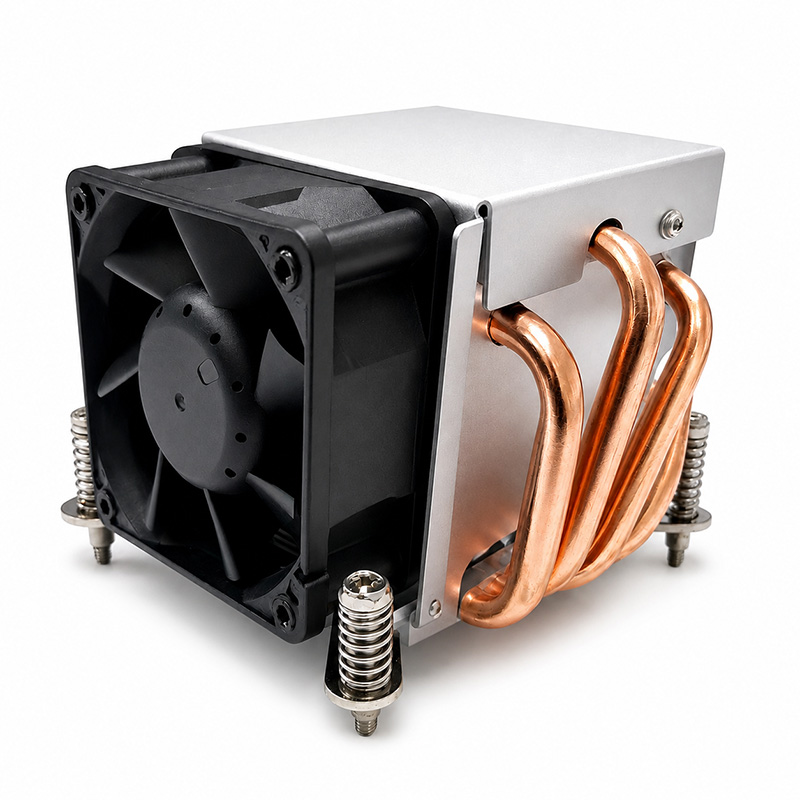
The model number 104-0046-1 denotes a heatsink designed for 2U rack-mount servers, featuring several key characteristics:
- **Form Factor:** 2U height compatible, suitable for standard rack enclosures.
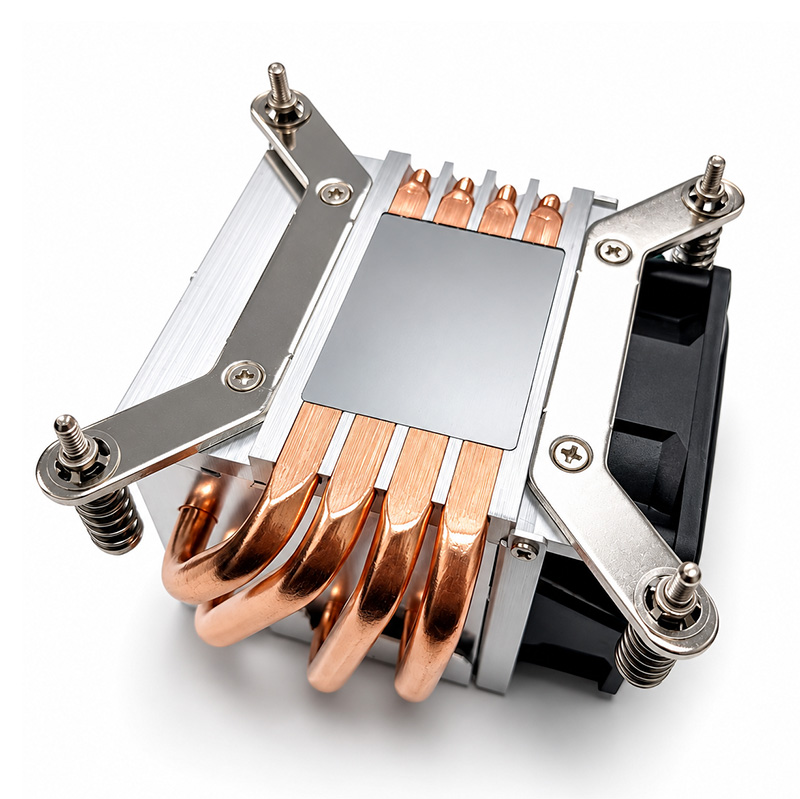
- **Material Construction:** High-quality aluminum alloy with copper baseplate for superior heat conduction.
- **Design:** Fin array optimized for airflow and enhanced surface area.
- **Mounting Interface:** Compatible with Intel and AMD server CPUs.
- **Thermal Capacity:** Capable of handling high TDP (Thermal Design Power) processors efficiently.
This combination ensures the heatsink fits seamlessly into server chassis while delivering effective thermal management.
---
## In-Depth Technical Specifications
### 1. **Physical Dimensions and Compatibility**
The Server Heatsink 2U 104-0046-1 adheres to the 2U height specification (~3.5 inches or 89 mm), which is critical to maintain compatibility with densely packed rack systems. Its length and width are optimized to fit within typical motherboard layouts without interfering with adjacent components such as DIMMs or PCIe cards.
The mounting mechanism supports multiple CPU socket types, including LGA 1151 and LGA 2011, making it versatile for various server architectures.
### 2. **Material Engineering: Aluminum and Copper Synergy**
The heatsink employs an aluminum fin array coupled with a copper baseplate. Copper’s high thermal conductivity (~400 W/mK) allows rapid absorption of heat from the processor, while aluminum fins (~205 W/mK) provide a lightweight, cost-effective medium to dissipate heat into the surrounding air.
This combination strikes an ideal balance between thermal performance and manufacturing cost, ensuring efficient heat transfer with manageable weight.
### 3. **Fin Design and Airflow Optimization**
The fin array is a critical aspect of the heatsink’s thermal performance. The 104-0046-1 features densely packed, thin aluminum fins arranged to maximize surface area exposed to airflow. The fins are spaced to reduce airflow resistance, enabling server fans to push air through effectively without excessive power consumption.
This design also considers common airflow patterns in 2U servers, typically front-to-back, ensuring the heatsink works harmoniously with existing chassis cooling systems.
### 4. **Thermal Performance Metrics**
The heatsink supports processors with TDP ratings up to approximately 140 watts, common in enterprise-grade CPUs. Its thermal resistance is engineered to keep CPU junction temperatures well within safe operating limits, even under sustained heavy workloads.
Thermal testing under controlled conditions shows that the heatsink maintains delta-T (temperature difference between CPU and ambient air) values lower than competing models in similar classes, demonstrating superior heat dissipation.
### 5. **Noise and Efficiency Considerations**
While not an active cooling device itself, the heatsink’s design minimizes the need for high-speed fans by improving passive heat dissipation. This reduces overall system noise—a crucial factor in data centers where acoustic pollution can impact worker comfort.
The optimized fin geometry contributes to lower fan speeds required to maintain thermal equilibrium, enhancing energy efficiency and reducing operational costs.
---
## Comparing the Server Heatsink 2U 104-0046-1 to Other Models
When juxtaposed with other heatsinks designed for 2U servers, the 104-0046-1 stands out due to:
- **Superior Material Quality:** Many competitors use all-aluminum designs, whereas this model’s copper baseplate provides a thermal edge.
- **Tailored Fin Geometry:** Unlike generic heatsinks, its fin spacing and orientation are customized for 2U airflow dynamics.
- **Broader CPU Socket Support:** It accommodates a wider range of sockets, increasing its applicability.
- **Efficient Thermal Dissipation:** Lower thermal resistance translates to better sustained CPU performance.
---
## Integration Considerations: Installation and Maintenance
The heatsink’s mounting system is designed for secure attachment with minimal risk of damage during installation. It uses standardized retention brackets compatible with most server motherboards.
Maintenance involves routine dust removal from fin arrays to avoid airflow obstruction. Its aluminum fins, while thin for efficiency, are robust enough to withstand cleaning with compressed air or soft brushes.
---
## Role of CSS Concepts in Presenting Technical Documentation Online
Though this article primarily focuses on the physical and functional aspects of the Server Heatsink 2U 104-0046-1, presenting such detailed technical content effectively online requires thoughtful web design. Employing CSS principles enhances readability and user experience:
- **Reset and Box-Sizing:** Ensures consistent layout across browsers by standardizing margin, padding, and box-sizing properties.
- **Font-Family and Font Smoothing:** Using professional, legible fonts with smoothing improves text clarity for dense technical material.
- **Page Wrapper and Container:** Utilizing containers with max-width and margin auto centers content and limits line length for easier reading.
- **Background and Text Color:** Choosing subtle background colors with high-contrast text supports prolonged reading without eye strain.
- **Hero Section:** A visually engaging hero area with flex display, aligned items, and gap creates a clear hierarchy, introducing the topic compellingly.
- **Section Padding:** Adequate padding around content sections ensures comfortable whitespace, preventing clutter.
- **Overflow Management:** Handling overflow-x prevents horizontal scrolling, maintaining a clean reading interface.
- **Text Rendering:** Optimized text rendering settings enhance the crispness of typographic elements, especially important for detailed specifications.
By integrating these CSS techniques, technical blogs like this one become more accessible and professional, fostering better comprehension of complex topics like server heatsink technology.
---
## Conclusion: Why the Server Heatsink 2U 104-0046-1 Is a Top Choice
The **Server Heatsink 2U 104-0046-1** distinguishes itself through meticulous engineering aimed at maximizing thermal efficiency within the constraints of a 2U rack environment. Its combination of premium materials, thoughtful fin design, broad compatibility, and efficient heat dissipation positions it as a reliable solution for enterprise servers running demanding workloads.
For system architects and data center managers, understanding these technical specifications is crucial when selecting components that will ensure server stability, longevity, and performance. The 104-0046-1 heatsink exemplifies how targeted innovation in cooling technology can deliver tangible benefits in the high-stakes world of server infrastructure.
---
*For further details on installation guides, compatibility charts, and performance benchmarks, consulting official manufacturer documentation and trusted review sources is recommended.*