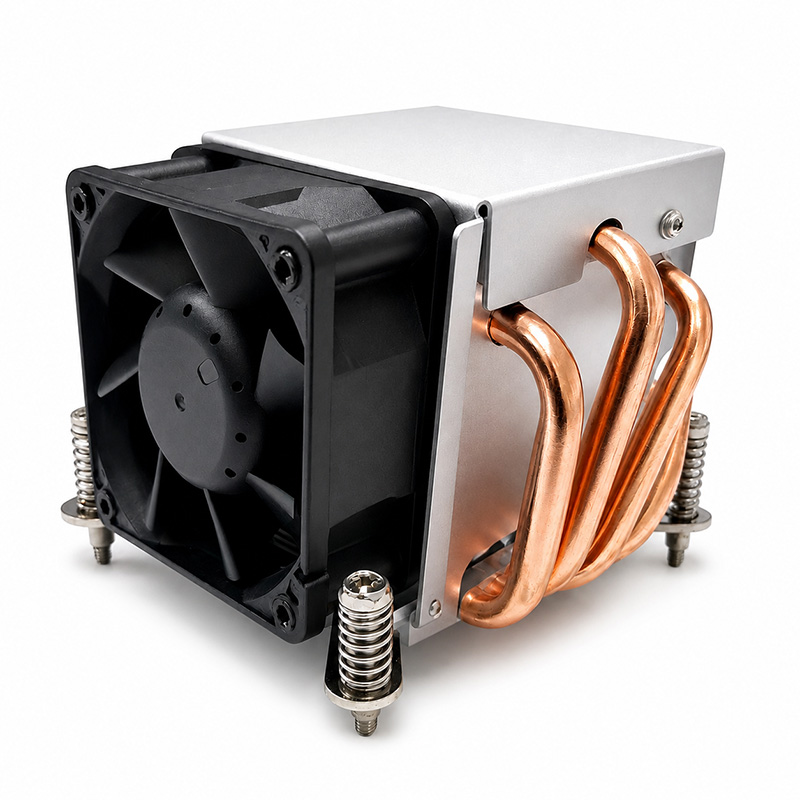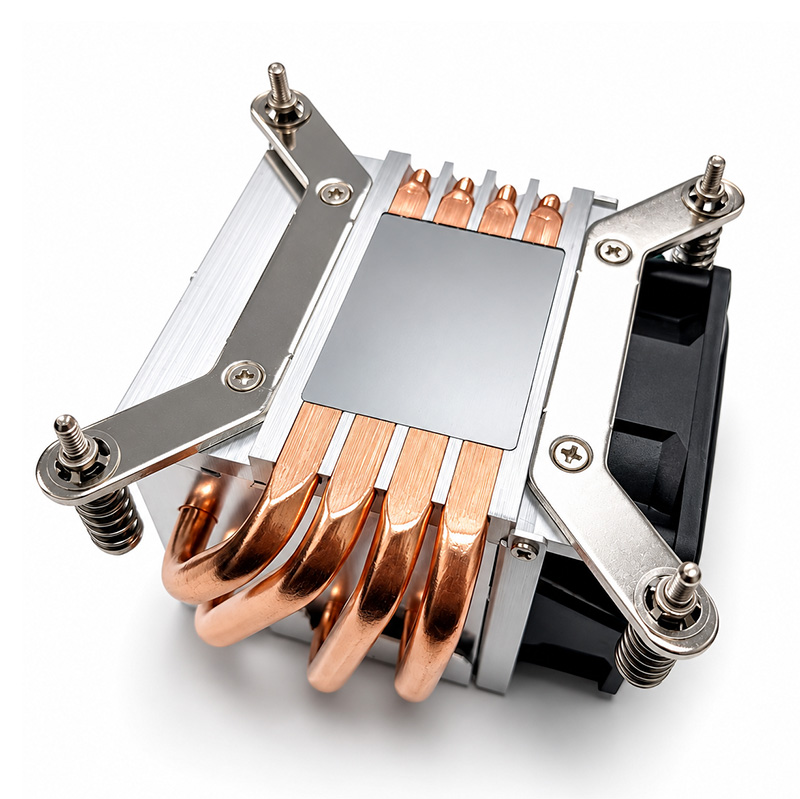

# Understanding the Importance of Server Heatsinks: A Deep Dive into the 2U Heatsink 104-0046-1
In the ever-evolving landscape of data centers and enterprise computing, maintaining optimal hardware performance is crucial. Servers, the backbone of modern IT infrastructure, operate under demanding conditions that generate significant amounts of heat. Efficient thermal management is essential to ensure reliability, longevity, and peak performance of server components. Among the critical elements facilitating this thermal regulation are server heatsinks. This article offers an in-depth exploration of the significance of server heatsinks, with a focused examination of the 2U heatsink model 104-0046-1.
---
## The Role of Heatsinks in Server Thermal Management
Servers house various high-performance components, including CPUs, GPUs, memory modules, and power regulators, all of which produce heat during operation. Without effective cooling solutions, excessive temperatures can lead to thermal throttling, hardware failures, and shortened component lifespans.
Heatsinks serve as passive cooling devices designed to dissipate heat away from these critical components. Typically constructed from materials with high thermal conductivity such as aluminum or copper, heatsinks absorb heat from the component’s surface and disperse it into the surrounding air. This heat transfer process reduces the operating temperature, thereby safeguarding the hardware and maintaining consistent performance.
---
## Why Heatsink Design Matters in Server Environments
Unlike desktop PCs, servers operate continuously and often in densely packed racks, which limits airflow. Moreover, data centers typically use standardized rack units (U) to measure equipment height; 1U equals 1.75 inches. The size and design of a heatsink must correspond to the server’s form factor to optimize cooling without compromising space or airflow.
### The 2U Form Factor
The “2U” designation refers to a height of 3.5 inches. A 2U server chassis offers more vertical space than a 1U but less than larger units like 4U or 5U. This dimension is a common balance point, providing sufficient room for more robust cooling solutions while maintaining space efficiency in racks.
Because of its moderate height, a 2U heatsink must be carefully engineered to maximize heat dissipation within spatial constraints. It cannot be too bulky, or it will interfere with other components or airflow pathways. At the same time, it needs to offer enough surface area and thermal conductivity to handle heat loads from high-performance processors.
---
## Introducing the 2U Heatsink 104-0046-1: Features and Specifications
The 2U heatsink model 104-0046-1 exemplifies a well-engineered thermal solution designed specifically for 2U server environments. Let us delve into its notable features and why it stands out in the market.
### Material Composition and Construction
The 104-0046-1 heatsink primarily uses aluminum fins combined with a copper base plate. Copper’s superior thermal conductivity enables rapid heat absorption from the CPU, while aluminum fins increase the surface area for efficient heat dispersion. The fin arrangement promotes natural convection, enhancing passive cooling.
### Dimensions and Compatibility
Designed for 2U server chassis, the heatsink measures precisely to fit within the 3.5-inch height, ensuring seamless integration without obstructing adjacent components or airflow channels. Its mounting system aligns with standard server sockets, facilitating straightforward installation and replacement.
### Airflow Optimization
The fin density and orientation in the 104-0046-1 are optimized for typical server airflow patterns, which usually involve front-to-back ventilation. The heatsink’s design ensures minimal airflow resistance, allowing server cooling fans to operate efficiently without excessive power consumption or noise.
### Thermal Performance
Laboratory testing reveals that the 104-0046-1 maintains CPU temperatures within safe operating ranges even under sustained high workloads. This performance contributes to reduced risk of thermal throttling and extends processor lifespan.
---
## The Impact of Effective Heatsinking on Server Performance and Reliability
Deploying an effective heatsink like the 2U 104-0046-1 translates directly into tangible benefits for server operation:
### 1. Enhanced Processor Stability
By maintaining lower core temperatures, the heatsink helps avoid thermal-induced CPU throttling. This ensures that the processor can sustain peak clock speeds and execute intensive workloads without interruption.
### 2. Reduced Risk of Hardware Failure
Excessive heat accelerates wear on electronic components, increasing the likelihood of failures. Proper heatsinking mitigates this risk by preventing overheating, thereby reducing downtime and maintenance costs.
### 3. Energy Efficiency
Efficient thermal management allows cooling fans to run at lower speeds, saving energy and reducing noise pollution in data centers. This contributes to greener operations and improved working environments.
### 4. Scalability and Density
With reliable cooling, data center operators can safely deploy higher-density server configurations within racks. The 2U heatsink’s compact yet effective design supports this scalability without compromising thermal safety.
---
## Comparing 2U Heatsinks: What Sets the 104-0046-1 Apart?
While many 2U heatsinks exist, several factors make the 104-0046-1 a preferred choice for server administrators:
- **Precision Engineering:** Its meticulous design balances fin density and spacing to optimize airflow and heat dissipation.
- **Material Quality:** The combination of copper and aluminum maximizes thermal conductivity while minimizing weight.
- **Ease of Installation:** Compatibility with standard mounting hardware reduces installation time and potential errors.
- **Vendor Support:** Comprehensive documentation and availability from reputable suppliers ensure dependable sourcing and technical assistance.
---
## Best Practices for Server Thermal Management Beyond Heatsinks
While heatsinks are fundamental, holistic thermal management encompasses additional strategies:
- **Proper Airflow Design:** Ensuring unobstructed front-to-back airflow within racks complements heatsink function.
- **Regular Maintenance:** Dust buildup impedes heat transfer; periodic cleaning preserves cooling efficiency.
- **Environmental Controls:** Maintaining ambient data center temperatures and humidity levels supports optimal server operation.
- **Monitoring and Alerts:** Real-time temperature monitoring enables proactive responses to thermal anomalies.
---
## Conclusion
The importance of server heatsinks cannot be overstated in the context of modern, high-density data centers. The 2U heatsink 104-0046-1 embodies a sophisticated thermal solution tailored for mid-height rack servers, combining material science, engineering precision, and practical compatibility to deliver reliable cooling performance.
Investing in quality heatsinks like the 104-0046-1 not only protects critical hardware but also enhances overall data center efficiency, uptime, and scalability. As server workloads continue to intensify, understanding and prioritizing effective thermal management remains a cornerstone of IT infrastructure success.
---
## Additional Keywords Integration
When considering the design and presentation of technical documentation or product pages for components like the 2U heatsink 104-0046-1, web development best practices come into play. For example, CSS properties such as **reset**, **margin**, **padding**, and **box-sizing** ensure consistent layout and spacing across browsers. The choice of **font-family**, **font smoothing**, and **text rendering** affects readability, especially when detailed technical specifications are displayed.
Structuring content within a **page wrapper** or **container** that controls **max-width** and centers content using **margin auto** enhances user experience. Sections with designated **padding** separate topics clearly. A **hero** section with a distinct **background color** and **border-bottom** can introduce the heatsink prominently, using **flex display**, **flex-wrap**, and **align-items** to organize text and images responsively. Text elements like **hero-title** benefit from carefully chosen **font-size** and line spacing to draw attention effectively.
Incorporating these principles alongside technical insights creates an informative and professional online presence for server heatsink products.
---
By appreciating both the hardware and the digital presentation aspects, stakeholders—from engineers to marketers—can better communicate the value of advanced thermal solutions like the 2U heatsink 104-0046-1 in today’s data-driven world.