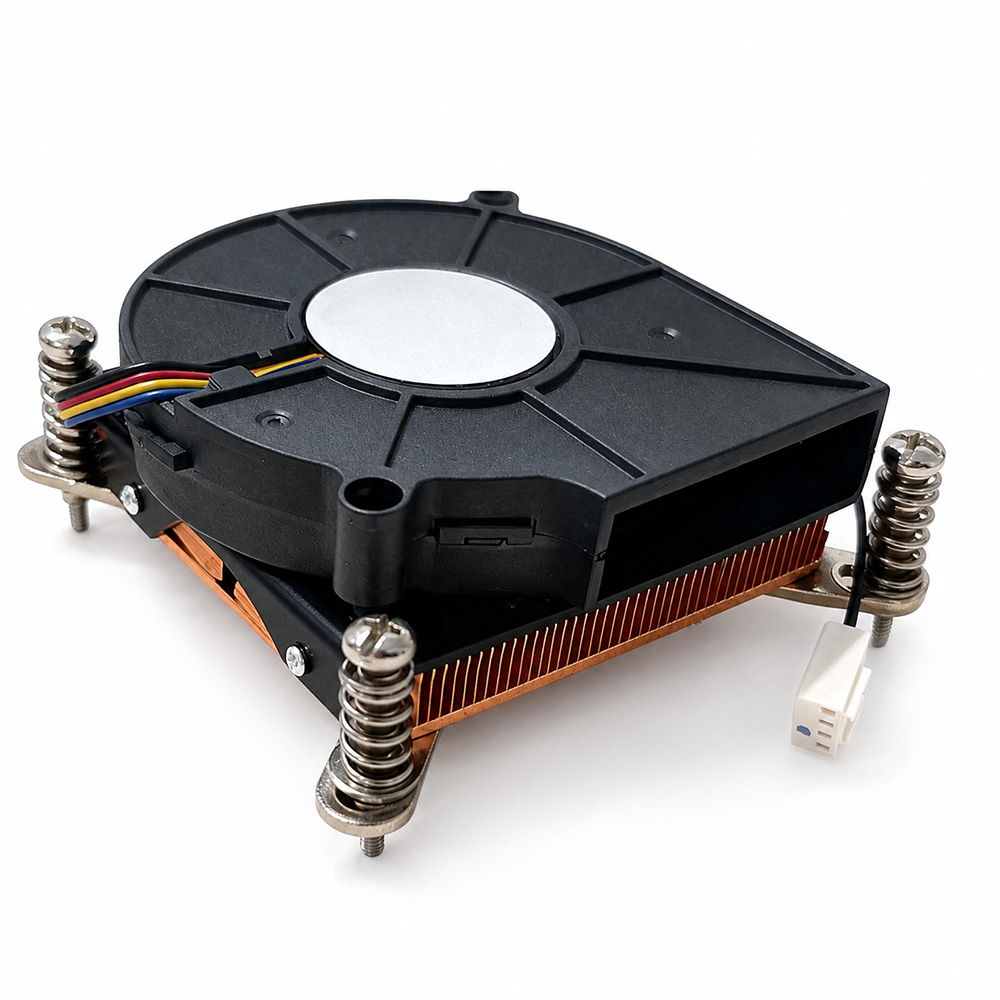

# Understanding the Importance of the Server Heatsink 1U Heat Sink 103-0011-1 in Data Centers
In the ever-evolving landscape of data centers, ensuring optimal hardware performance and longevity is paramount. Among the myriad components that contribute to this goal, one often overlooked yet critical part is the server heatsink. Specifically, the **1U Heat Sink 103-0011-1** plays a pivotal role in maintaining the operational integrity of servers housed within dense rack configurations. This article delves deep into the significance of this component, exploring its design, functionality, and impact on data center efficiency.
---
## The Role of Heatsinks in Data Centers
Data centers are the backbone of modern digital infrastructure, housing thousands of servers that handle massive volumes of data processing, storage, and transmission. Each server generates substantial heat during operation, and without effective thermal management, this heat can lead to hardware failures, reduced performance, and increased energy consumption.
Heatsinks are passive cooling devices designed to dissipate heat away from critical components such as CPUs and GPUs. By transferring heat to the surrounding air, they prevent overheating and ensure that the servers operate within safe temperature ranges.
---
## What is the 1U Heat Sink 103-0011-1?
The **1U Heat Sink 103-0011-1** is a specialized heatsink engineered for 1U rack-mounted servers—a form factor known for its slim profile and high-density deployment. The "1U" designation refers to a height of 1.75 inches (44.45 mm), which places stringent constraints on cooling solutions due to limited vertical space.
This particular model, identified by the part number 103-0011-1, is designed to maximize thermal dissipation within these spatial limitations. It balances the need for robust heat removal with the compactness required in modern data center environments.
---
## Design Considerations for the 1U Heat Sink 103-0011-1
### 1. **Material Selection**
The material used in the construction of the heatsink significantly influences its thermal conductivity. Typically, aluminum or copper are favored due to their excellent ability to conduct heat. The 103-0011-1 heatsink employs high-grade materials that optimize the transfer of heat from the processor to the fins of the heatsink.
### 2. **Fin Geometry and Surface Area**
Heat dissipation efficiency correlates directly with surface area. The 1U Heat Sink 103-0011-1 features meticulously designed fins that increase the surface area exposed to airflow, facilitating better heat transfer. The fin arrangement is tailored to accommodate airflow patterns typical of 1U server chassis.
### 3. **Compatibility and Mounting**
Given the diversity of server hardware, compatibility is crucial. The 103-0011-1 is engineered to fit specific CPU socket types and motherboard layouts, ensuring secure mounting and optimal contact with the heat-generating components.
---
## Heat Management Challenges in 1U Servers
Operating within a confined vertical space presents unique challenges:
- **Limited Airflow:** The narrow spacing between 1U servers restricts airflow, necessitating efficient heat sinks that can function effectively even with reduced air movement.
- **High Component Density:** With multiple components densely packed, localized hotspots can develop if cooling is inadequate.
- **Noise Constraints:** Cooling fans in data centers must balance performance with noise levels; thus, passive solutions like effective heatsinks can reduce reliance on high-speed fans.
The 1U Heat Sink 103-0011-1 addresses these challenges through its optimized design, enabling reliable cooling without excessive power draw or noise generation.
---
## Impact on Data Center Operations
### 1. **Improved Hardware Reliability**
Consistent thermal regulation reduces the risk of hardware failure caused by thermal stress. The use of the 1U Heat Sink 103-0011-1 contributes to prolonging the lifespan of critical server components.
### 2. **Energy Efficiency**
By enhancing passive cooling, this heatsink reduces dependence on active cooling systems like fans and air conditioning units. This translates to lower energy consumption and operating costs—an essential consideration given the scale of data centers.
### 3. **Maintaining Performance**
Thermal throttling occurs when processors reduce their speed to prevent overheating. Effective cooling with the 103-0011-1 helps maintain peak performance, ensuring that data center workloads run smoothly and efficiently.
---
## Integration into Data Center Infrastructure
Incorporating the 1U Heat Sink 103-0011-1 requires thoughtful integration into the broader data center setup. Key considerations include:
- **Page Wrapper: Overall system design should allow for easy access to heatsinks during maintenance or upgrades without disrupting other components.**
- **Background Color and Visual Indicators:** While not directly related to thermal management, consistent visual interfaces in management systems (e.g., dashboards with background color #f4f8ff and text color #111) facilitate monitoring of server health including temperature metrics.
- **Section Padding and Container Margins:** Physical layout and cable management within racks should consider adequate padding and margin spaces to prevent airflow obstruction.
- **Font Smoothing and Text Rendering in Monitoring Software:** Clear visualization tools utilizing font smoothing (webkit-font-smoothing) and optimized text rendering (optimizeLegibility) enhance operator ability to interpret real-time thermal data.
---
## Best Practices for Utilizing the 1U Heat Sink 103-0011-1
To maximize the benefits of this heatsink, data center administrators should adopt best practices such as:
- **Regular Reset and Recalibration:** Periodically resetting thermal sensors and recalibrating fans ensures accurate temperature readings and optimal cooling response.
- **Maintenance of Margin and Padding in Physical Layout:** Ensuring that the physical spacing (margin and padding) around servers allows for unobstructed airflow is critical.
- **Box-Sizing and Physical Dimensions Compliance:** Adhering to precise box-sizing standards during installation guarantees a snug fit, preventing vibrations and ensuring thermal contact.
- **Monitoring Through Advanced Software:** Leveraging software that respects container max-width (1180px) constraints for dashboards ensures visibility across devices, while container margin auto settings ensure centralized display of critical data.
---
## Future Trends and Innovations
As data centers continue to evolve, so will cooling technologies. Innovations anticipated include:
- **Advanced Materials:** Development of novel materials with superior thermal conductivity and lightweight properties.
- **Integrated Heat Pipes:** Combining heatsinks with heat pipes or vapor chambers for enhanced heat transfer.
- **Adaptive Cooling Systems:** Integration with AI-driven monitoring to dynamically adjust cooling based on workload intensity.
The 1U Heat Sink 103-0011-1 represents a current industry standard, but staying abreast of emerging technologies will be crucial for future-proofing data center operations.
---
## Conclusion
The **Server Heatsink 1U Heat Sink 103-0011-1** is a fundamental component in ensuring the reliability, efficiency, and longevity of 1U rack-mounted servers in data centers. Its carefully engineered design addresses the unique challenges posed by high-density, low-profile server environments. By effectively managing thermal loads, it protects valuable hardware investments, reduces operational costs, and maintains optimal server performance.
For data center operators looking to optimize their infrastructure, understanding and implementing appropriate cooling solutions like the 1U Heat Sink 103-0011-1 is not just beneficial—it’s essential.
---
*By embracing detailed design principles and integrating best practices in physical layout and monitoring, data centers can harness the full potential of their hardware while minimizing risks associated with thermal management.*