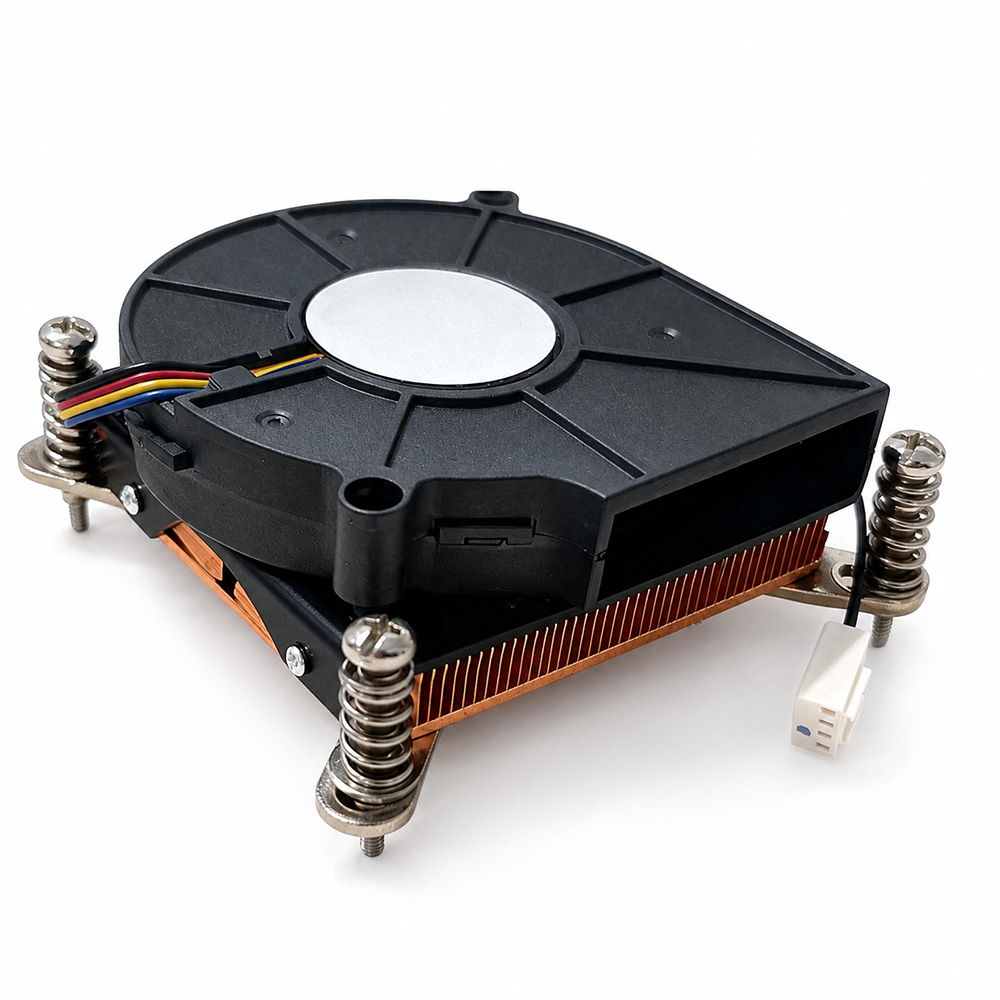

# Choosing the Right Heat Sink: Why the 103-0011-1 is Ideal for 1U Servers
In the realm of data centers and enterprise computing, managing thermal performance is crucial. Among the many components that contribute to effective heat dissipation in servers, the heat sink stands out as a vital piece of hardware. This article delves into the importance of selecting the right heat sink for 1U servers and why the **103-0011-1 model** emerges as an ideal choice for such applications.
## Understanding Heat Sinks and Their Role in 1U Servers
Heat sinks are passive cooling devices designed to absorb and dissipate heat generated by electronic components—primarily CPUs—in order to maintain optimal operating temperatures. Their performance directly affects system reliability, longevity, and efficiency.
1U servers (those with a height of 1.75 inches or roughly 44.45 mm) present unique challenges when it comes to thermal management. Due to their slim profile, space constraints limit the size and type of cooling solutions that can be employed. Consequently, heat sinks used in these servers must be compact yet efficient, balancing form factor with thermal performance.
## Key Considerations When Choosing a Heat Sink for 1U Servers
When selecting a heat sink for 1U servers, several critical factors need to be evaluated:
### 1. **Thermal Dissipation Efficiency**
The primary function of any heat sink is to transfer heat away from the CPU to prevent overheating. The thermal resistance (measured in °C/W) indicates how well the heat sink dissipates heat; lower values signify better performance. For 1U servers, a heat sink must efficiently handle the heat density typical of server-grade processors without compromising the limited airflow available.
### 2. **Form Factor and Height Constraints**
Given the limited vertical space in a 1U chassis, the heat sink must have a low profile. It needs to fit within the server’s confined internal environment while still providing sufficient surface area for heat dissipation.
### 3. **Material Quality**
Heat sinks are commonly made from aluminum or copper due to their excellent thermal conductivity. Copper offers superior heat conduction but is heavier and more expensive. Aluminum is lightweight and cost-effective but less thermally conductive. Some heat sinks combine these metals to optimize performance and weight.
### 4. **Compatibility and Mounting**
The heat sink should be compatible with the server’s motherboard and CPU socket type. Secure mounting ensures proper contact between the heat sink base and the CPU heat spreader, which is critical for efficient heat transfer.
### 5. **Airflow Optimization**
In 1U servers, active cooling often complements the heat sink. The design should facilitate airflow, working synergistically with server fans to maximize heat removal.
## Introducing the 103-0011-1 Heat Sink
The **103-0011-1 heat sink** has gained traction as one of the most reliable cooling solutions tailored specifically for 1U server environments. It strikes a thoughtful balance between compact design and high-performance thermal management, making it a go-to option for system integrators and data center operators alike.
### Design and Build Quality
The 103-0011-1 features a low-profile form factor optimized for 1U chassis heights. Its fin array is engineered to maximize surface area within tight spaces, facilitating effective convection cooling even under constrained airflow conditions common in 1U servers.
Constructed primarily from high-grade aluminum, the heat sink offers a lightweight yet robust solution. The base is finely machined to ensure smooth contact with the CPU, enhancing thermal conductivity. Additionally, the design incorporates precision-engineered mounting points, ensuring compatibility with a wide range of server motherboards and CPU sockets.
### Thermal Performance
Performance benchmarks consistently show that the 103-0011-1 delivers excellent thermal resistance figures in the context of 1U servers. The optimized fin arrangement and material composition enable efficient heat dissipation, keeping CPUs within safe operating temperatures during peak loads.
This efficiency is crucial, especially as modern server processors generate significant heat density despite their compact size. The 103-0011-1’s ability to maintain thermal stability helps reduce throttling and prolong processor life.
### Compatibility and Installation
One of the standout benefits of the 103-0011-1 heat sink is its broad compatibility. It supports multiple popular CPU socket types used in enterprise servers, simplifying inventory and deployment across different hardware configurations.
Installation is straightforward thanks to the heat sink’s design, which accommodates standard mounting mechanisms prevalent in 1U server chassis. This reduces installation time and minimizes the risk of improper seating that could jeopardize thermal performance.
### Airflow Integration
The heat sink’s geometry is designed to complement the directional airflow generated by server fans. Its fins are aligned to minimize resistance to airflow, encouraging efficient passage of cool air over the heat sink surfaces and expulsion of hot air out of the chassis.
This synergy between heat sink design and server airflow patterns is vital in 1U setups where every cubic inch counts.
## Why the 103-0011-1 Stands Out: A Comparative Perspective
While there are numerous heat sinks marketed for 1U servers, the 103-0011-1 excels due to its balanced engineering approach:
- **Compactness without Compromise:** Unlike some ultra-low-profile heat sinks that sacrifice thermal performance for size, the 103-0011-1 maintains high thermal efficiency while fitting snugly in 1U spaces.
- **Material Choice:** Although copper-based heat sinks may offer marginally better conductivity, their increased weight and cost make them less practical for dense server deployments. The aluminum construction of the 103-0011-1 provides a prudent compromise.
- **Optimized Fin Design:** The fin arrangement maximizes surface area and promotes airflow, which is a critical differentiator compared to simpler designs that impede ventilation.
- **Ease of Deployment:** Its compatibility and mounting ease reduce installation errors and maintenance downtime, important considerations for enterprise environments.
## Practical Considerations: Beyond Thermal Performance
Choosing a heat sink isn’t solely about raw thermal numbers. Several practical factors influence the decision-making process:
### Reliability and Durability
Servers operate continuously, often under heavy workloads. The heat sink must withstand environmental stresses such as vibration and temperature cycling. The 103-0011-1’s robust build quality ensures long-term durability.
### Cost Efficiency
Data centers often deploy thousands of servers, so component costs accumulate quickly. The 103-0011-1 offers an attractive price-to-performance ratio, helping organizations manage budgets without sacrificing operational integrity.
### Environmental Impact
Energy efficiency is increasingly important. Effective cooling reduces the power consumption of fans and other cooling infrastructure, indirectly reducing the server's carbon footprint. By maintaining optimal temperatures, the 103-0011-1 contributes to greener IT operations.
## Implementing the 103-0011-1 in Your Server Infrastructure
When integrating the 103-0011-1 heat sink into your 1U server setups, consider the following best practices:
- **Ensure Proper Thermal Interface Material (TIM):** Applying high-quality thermal paste or pads between the CPU and heat sink base optimizes heat transfer.
- **Maintain Clean Airflow Paths:** Regularly clean dust and debris from server interiors to prevent airflow obstruction around heat sinks.
- **Monitor Temperatures Continuously:** Use server management tools to track CPU temperatures and confirm that cooling systems—including the heat sink—are functioning effectively.
- **Plan for Scalability:** If deploying at scale, validate heat sink performance under real-world workloads to anticipate any cooling bottlenecks.
## Conclusion
Selecting the right heat sink for 1U servers is a nuanced task involving trade-offs between size, thermal performance, compatibility, and cost. The **103-0011-1 heat sink** emerges as an ideal candidate by expertly balancing these factors. Its compact design, efficient thermal dissipation, compatibility, and integration-friendly features make it a dependable choice for server environments where space and performance are at a premium.
By investing in a heat sink like the 103-0011-1, organizations can enhance server reliability, optimize cooling efficiency, and ultimately support the demanding workloads of today’s enterprise data centers.
---
*For further technical specifications or procurement details of the 103-0011-1 heat sink, consulting with hardware vendors or manufacturers is recommended.*