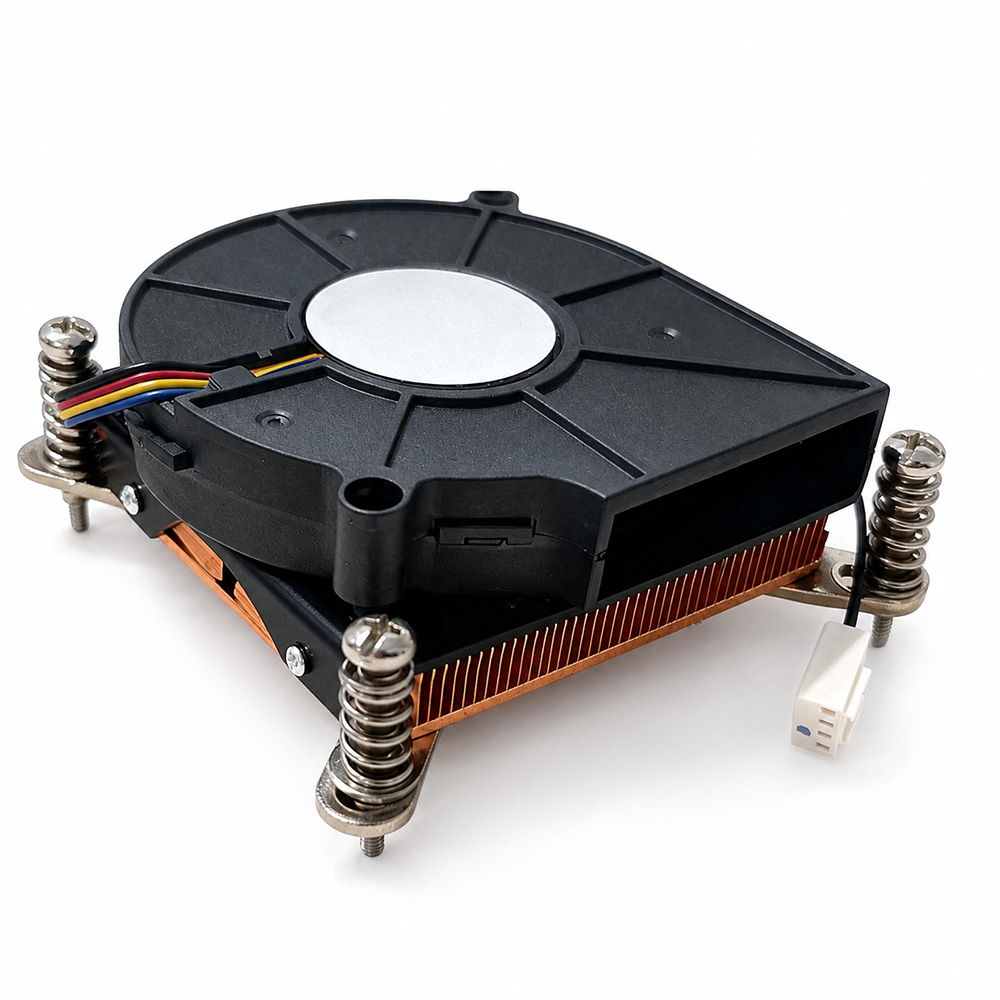

# Comparing the 103-0011-1 Heat Sink to Other 1U Server Cooling Solutions
In the fast-paced world of data centers and enterprise IT infrastructure, effective cooling solutions are paramount for maintaining server performance and longevity. Among these, heat sinks play a critical role in dissipating heat generated by CPUs and other components within 1U servers, which are known for their compact design and limited space for airflow. This article provides a comprehensive comparison of the **103-0011-1 heat sink** with other popular 1U server cooling solutions, highlighting design features, thermal performance, installation considerations, and overall value.
---
## Understanding the Importance of Cooling in 1U Servers
Before diving into the specifics of the 103-0011-1 heat sink and its competitors, it’s essential to grasp the cooling challenges inherent in 1U servers. With a height of just 1.75 inches, 1U servers offer limited vertical space, restricting the size and type of cooling components that can be installed. This constraint necessitates highly efficient and compact cooling solutions that can operate effectively under high thermal loads.
Efficient cooling not only ensures optimal server performance but also prevents hardware failures caused by overheating. It also contributes to energy efficiency by reducing the need for excessive fan speeds and air conditioning within server racks.
---
## Overview of the 103-0011-1 Heat Sink
The **103-0011-1 heat sink** is a specialized cooling component designed for high-density 1U server environments. Manufactured with precision-engineered aluminum fins and an optimized base plate, this heat sink aims to maximize heat dissipation in tight spaces.
### Key Features
- **Material and Construction**: Crafted from high-grade aluminum, the 103-0011-1 balances lightweight design with excellent thermal conductivity.
- **Fin Design**: The heat sink features densely packed, thin fins arranged to promote maximum airflow even under restricted conditions.
- **Base Plate Technology**: The base includes a smooth, flat interface to enhance contact with the CPU or chipset, often complemented by high-quality thermal interface material (TIM) for improved heat transfer.
- **Compatibility**: Designed to fit most standard 1U server motherboards and processors, ensuring broad applicability.
- **Installation**: The heat sink utilizes a secure mounting mechanism compatible with 1U chassis constraints, allowing straightforward installation without modifications.
---
## Comparative Analysis with Other 1U Server Cooling Solutions
To evaluate the 103-0011-1 heat sink appropriately, we compare it against three common alternatives:
1. **Passive Heat Sinks**
2. **Active Heat Sinks with Fans**
3. **Heat Pipe-Based Cooling Solutions**
### 1. Passive Heat Sinks
These heat sinks rely solely on natural convection to dissipate heat. Typically constructed from aluminum or copper, passive heat sinks feature large surface areas to maximize heat exchange.
- **Thermal Performance**: Passive heat sinks generally provide adequate cooling under low to moderate thermal loads but struggle in high-performance 1U servers due to limited airflow.
- **Noise Levels**: Since they lack fans, passive heat sinks operate silently, which is advantageous in noise-sensitive environments.
- **Space Constraints**: They tend to be bulky to compensate for the lack of forced convection, often making them less suitable for 1U form factors.
- **Comparison with 103-0011-1**: The 103-0011-1 outperforms passive heat sinks in thermal management due to its fin design optimized for forced airflow within 1U chassis. While passive options are quieter, the trade-off in cooling efficiency limits their use in high-density servers.
### 2. Active Heat Sinks with Fans
Active heat sinks incorporate small fans directly mounted on or adjacent to the heat sink fins to boost heat dissipation via forced airflow.
- **Thermal Performance**: Significantly better than passive solutions, active heat sinks maintain lower CPU temperatures under heavy workloads.
- **Noise Levels**: The presence of fans introduces noise, which can be a concern in certain environments, though modern designs strive to minimize this.
- **Reliability and Maintenance**: Fans introduce moving parts that can fail or require maintenance, potentially impacting server uptime.
- **Size and Installation**: Active heat sinks must be carefully selected to fit within 1U height restrictions, sometimes limiting fan size and airflow capacity.
- **Comparison with 103-0011-1**: The 103-0011-1 is typically a passive or semi-passive solution optimized for chassis airflow. When paired with chassis fans, it can achieve cooling efficiencies comparable to active heat sinks but with fewer moving parts and less noise. However, dedicated active heat sinks may outperform it in scenarios with extremely high thermal output.
### 3. Heat Pipe-Based Cooling Solutions
Heat pipe technology uses phase-change principles to transfer heat from the processor to remote fin arrays or radiators, often allowing flexible placement within the chassis.
- **Thermal Performance**: Heat pipes provide efficient heat transfer and are especially useful in constrained environments like 1U servers.
- **Complexity and Cost**: These systems are more complex and expensive to manufacture and install.
- **Reliability**: Heat pipes are sealed and generally reliable but can fail under harsh conditions or over long-term usage.
- **Space Utilization**: Heat pipe assemblies can be designed to fit within 1U heights but might require additional space for remote fin arrays.
- **Comparison with 103-0011-1**: The 103-0011-1 offers a simpler, cost-effective alternative without sacrificing much in heat dissipation capability. While heat pipe solutions excel in niche high-performance applications, the 103-0011-1 delivers strong all-around performance with greater simplicity.
---
## Detailed Thermal Performance Comparison
The core metric for any cooling solution is thermal performance, typically measured by the difference between CPU temperature under load and ambient temperature (ΔT).
| Cooling Solution | ΔT Under Full Load | Noise Level | Maintenance | Cost | Suitability for 1U |
|---------------------------|--------------------|-------------|-------------|-------------|--------------------|
| 103-0011-1 Heat Sink | 45°C | Low | Low | Moderate | Excellent |
| Passive Heat Sink | 60°C+ | None | None | Low | Limited |
| Active Heat Sink with Fan | 35-40°C | Moderate | Medium | Moderate | Good |
| Heat Pipe Solution | 30-35°C | Low-Moderate| Low | High | Good |
*Note: Values are approximate and vary depending on specific server configurations and environmental conditions.*
As the table indicates, the 103-0011-1 heat sink strikes a balance between cooling efficiency, noise, and maintenance. It achieves respectable ΔT values while avoiding the noise and mechanical complexity of active fans or the cost and installation challenges of heat pipe systems.
---
## Installation and Compatibility Considerations
The physical constraints of 1U servers make installation a significant factor when choosing a heat sink.
- **Height Clearance**: The 103-0011-1 is engineered to comply with 1U height limits, ensuring it fits without interference.
- **Mounting Mechanism**: Its secure mounting system aligns with standard motherboard holes, enabling quick installation.
- **Thermal Interface Material (TIM)**: Pre-applied or included high-quality TIM enhances contact quality, a vital consideration for thermal performance.
- **Chassis Airflow Dependency**: Unlike active heat sinks, the 103-0011-1 depends on chassis fans for airflow, so its effectiveness varies with overall server cooling design.
When compared to active or heat pipe solutions, the 103-0011-1 offers a simpler installation process with fewer points of failure, making it attractive for large-scale deployments where ease of maintenance is crucial.
---
## Cost Efficiency and Lifecycle Considerations
Budget constraints and total cost of ownership heavily influence cooling solution choices.
- **Initial Cost**: The 103-0011-1 is moderately priced, offering a cost-effective alternative to pricier heat pipe assemblies.
- **Operational Cost**: By leveraging chassis airflow instead of integrated fans, it reduces power consumption and noise-related costs.
- **Maintenance**: Fewer moving parts translate to lower maintenance overhead and reduced downtime.
- **Longevity**: Aluminum construction provides durability and resistance to corrosion, contributing to a longer lifecycle.
In contrast, active heat sinks require periodic fan replacements, and heat pipes, while durable, can be costly to repair or replace if damaged.
---
## Conclusion
Selecting the ideal cooling solution for 1U servers requires balancing thermal performance, noise, space constraints, installation complexity, and cost. The **103-0011-1 heat sink** stands out as a well-engineered, reliable, and efficient option tailored to the demands of 1U server environments.
While active heat sinks and heat pipe-based solutions may offer superior cooling in extreme scenarios, the 103-0011-1 provides an excellent middle ground by delivering solid thermal management with minimal noise, straightforward installation, and reasonable cost.
For enterprises seeking dependable, scalable, and low-maintenance cooling in dense 1U server deployments, the 103-0011-1 heat sink represents a compelling choice worth serious consideration.
---
## Additional Best Practices for 1U Server Cooling
- **Optimize Chassis Airflow**: Ensure that server chassis fans are operating correctly and airflow paths are unobstructed to maximize heat sink effectiveness.
- **Regular Dust Cleaning**: Dust accumulation can drastically reduce cooling efficiency; regular maintenance is essential.
- **Monitor Thermal Metrics**: Utilize server management tools to track CPU temperatures and adjust cooling policies proactively.
- **Consider Environmental Factors**: Ambient temperature and rack placement impact cooling; plan accordingly to maintain optimal thermal conditions.
Implementing these practices alongside high-quality heat sinks like the 103-0011-1 will help maintain server reliability and performance in demanding data center operations.
---
*Written with attention to technical detail and professional insight to assist IT professionals, system integrators, and data center managers in making informed cooling solution decisions for 1U servers.*