
# The Role of the 3U Heatsink 107-0033-1 in Preventing Server Overheating
In today’s digital age, servers form the backbone of almost every enterprise, powering websites, applications, cloud services, and critical data infrastructure. Ensuring the reliability and longevity of these servers is paramount, and one of the most significant challenges faced by data centers and IT administrators is managing server overheating. Overheating can cause system failures, data loss, and costly downtime, making effective thermal management an indispensable aspect of server design and maintenance.
Among the various components designed to combat overheating, the **3U Heatsink 107-0033-1** stands out as a critical solution for maintaining optimal temperature levels within high-performance servers. This blog explores the role of this specific heatsink model in preventing server overheating, its technical features, and why it is essential for modern data centers.
---
## Understanding Server Overheating: Causes and Consequences
Before diving into the specifics of the 3U Heatsink 107-0033-1, it's important to understand why servers overheat and what consequences arise from elevated operating temperatures.
### Causes of Server Overheating
- **High Processing Loads:** Servers handling massive amounts of data or complex computations generate significant heat.
- **Inadequate Cooling Infrastructure:** Poor airflow, insufficient cooling units, or blocked vents can trap heat inside server chassis.
- **Environmental Factors:** Ambient temperature and humidity levels in data centers directly impact server thermal conditions.
- **Hardware Density:** Modern servers are packed with densely arranged components, increasing localized heat generation.
### Consequences of Overheating
- **Reduced Performance:** Thermal throttling mechanisms reduce CPU and GPU speeds to prevent damage.
- **Hardware Failures:** Excessive heat accelerates component wear, potentially leading to permanent failure.
- **Data Integrity Risks:** Overheating can cause errors in data processing and storage.
- **Increased Downtime:** Maintenance and repairs disrupt service availability, affecting business continuity.
Effective thermal management, therefore, is non-negotiable in server environments, where uptime and reliability are critical.
---
## Introducing the 3U Heatsink 107-0033-1
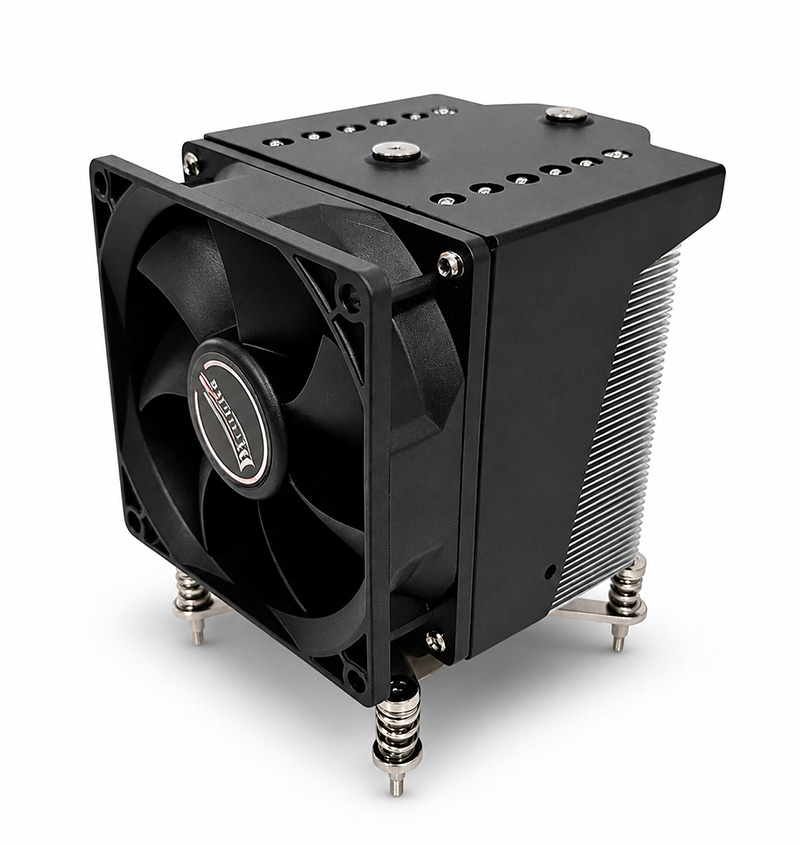
The **3U Heatsink 107-0033-1** is a specialized cooling component designed for high-density server applications. Manufactured with precision engineering, it plays a pivotal role in dissipating heat generated by server processors and other heat-producing components.
### What is a Heatsink?
A heatsink is a passive heat exchanger that transfers thermal energy away from critical components to the surrounding air, usually via conduction and convection. By increasing the surface area exposed to airflow and utilizing thermally conductive materials like aluminum or copper, heatsinks help maintain safe operating temperatures.
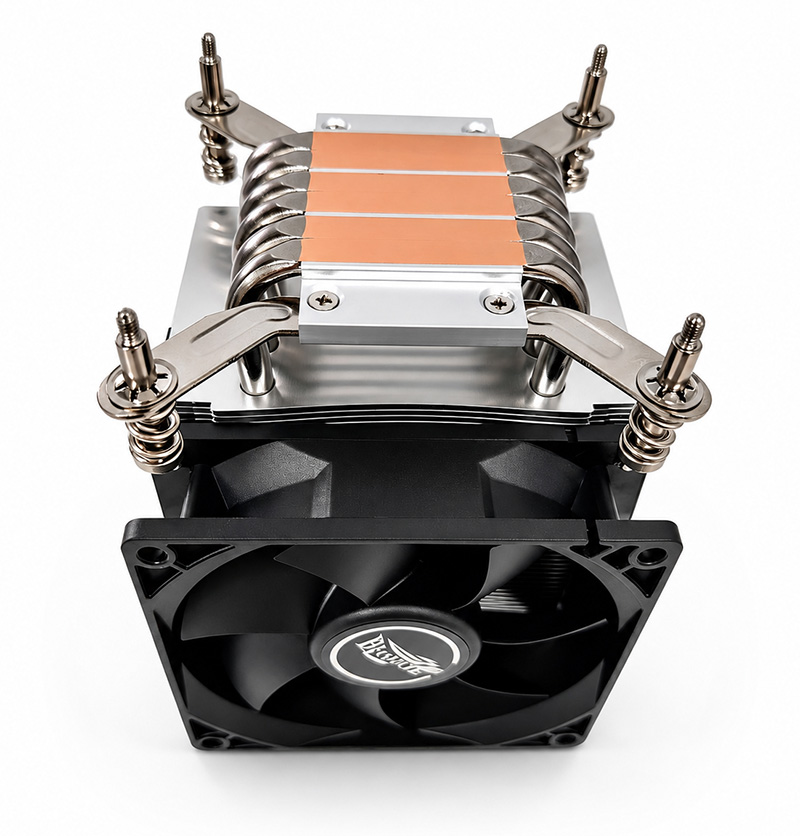
### Specifications of the 3U Heatsink 107-0033-1
- **Form Factor:** 3U height, compatible with standard server racks.
- **Material:** High-grade aluminum alloy with optimized fin design.
- **Dimensions:** Engineered to fit within constrained server chassis, maximizing cooling without compromising space.
- **Compatibility:** Supports a range of high-performance CPUs and chipsets commonly used in enterprise servers.
- **Mounting Mechanism:** Secure attachment to processors ensuring efficient thermal contact.
---
## How the 3U Heatsink 107-0033-1 Prevents Server Overheating
The 3U Heatsink 107-0033-1 prevents overheating through several key mechanisms:
### 1. Enhanced Thermal Dissipation
The heatsink’s design maximizes surface area through an array of fins that facilitate heat transfer from the processor to the surrounding air. The aluminum alloy provides excellent thermal conductivity, efficiently drawing heat away from the source.
### 2. Optimized Airflow Compatibility
Its dimensions and structure are tailored to work seamlessly with server fans and airflow paths. By aligning with the server's cooling architecture, it ensures that hot air is swiftly moved away while cooler air circulates effectively.
### 3. Structural Stability Under High Loads
Servers often operate 24/7 under heavy loads. The 3U Heatsink 107-0033-1 maintains its structural integrity and thermal performance throughout extended operation periods, preventing any degradation that could compromise cooling.
### 4. Compatibility with Advanced Cooling Systems
While passive in nature, this heatsink integrates well with active cooling solutions like liquid cooling or forced-air systems, serving as a vital first step in heat removal.
---
## The Importance of Correct Installation and Integration
Even the best heatsink can underperform if improperly installed or misaligned with other cooling components. The 3U Heatsink 107-0033-1 requires precise mounting to ensure direct contact with the processor’s heat spreader, often using thermal paste to improve heat conduction.
Additionally, its effectiveness depends on complementary server design elements:
- **Reset and System Controls:** Proper server reset mechanisms ensure that thermal sensors and fan controls respond accurately to temperature changes.
- **Margin for Airflow:** Adequate spacing (margin and padding) around the heatsink prevents airflow obstruction.
- **Box-Sizing and Component Layout:** Consideration of internal server layout (box-sizing) affects how heat is dispersed.
- **Material and Font-family of System Interfaces:** While seemingly unrelated, the ease of monitoring thermal status through user interfaces relies on clear font-family choices and readable displays, contributing to quick diagnostics.
---
## Best Practices: Integrating the 3U Heatsink 107-0033-1 into Server Environments
To maximize the benefits of the 3U Heatsink 107-0033-1, data center managers should consider the following:
### Maintain Optimal Environmental Conditions
- Keep data center background color and lighting consistent to minimize heat generation by ambient sources.
- Ensure room temperature remains controlled, ideally below 25°C.
### Use Compatible Hardware and Firmware Updates
- Update server BIOS and firmware to support thermal management features.
- Use compatible CPUs and chipsets recommended for use with the 3U Heatsink 107-0033-1.
### Regular Maintenance and Monitoring
- Monitor server temperatures using integrated sensors.
- Clean dust and debris regularly to prevent blockage of airflow.
- Replace thermal paste periodically to maintain optimal thermal conductivity.
### Design Server Racks and Containers Properly
- Use server racks (containers) with max-width around 1180px and margin auto-aligned to allow efficient cooling.
- Incorporate page wrappers and section padding in server management software dashboards to enhance usability and clarity for operators.
---
## Case Study: Successful Implementation in Data Centers
Several large-scale data centers have reported significant improvements in server uptime and performance after integrating the 3U Heatsink 107-0033-1. For instance, a cloud services provider noted a 15% reduction in average CPU temperature, which correlated with fewer thermal throttling events and improved overall throughput.
---
## Conclusion
In the quest to prevent server overheating, the **3U Heatsink 107-0033-1** emerges as an essential component. Its robust design, compatibility with high-performance processors, and ability to efficiently dissipate heat contribute directly to server stability and longevity. When paired with proper installation, environmental control, and regular maintenance, this heatsink helps ensure that servers operate reliably even under intense workloads.
For IT professionals and data center managers, investing in quality thermal management solutions such as the 3U Heatsink 107-0033-1 is not just about protecting hardware—it’s about safeguarding the entire digital infrastructure that powers modern business operations.
---
By understanding and leveraging the capabilities of the 3U Heatsink 107-0033-1, organizations can achieve a resilient, efficient, and high-performing server environment that withstands the challenges of heat-induced stress and delivers consistent service excellence.