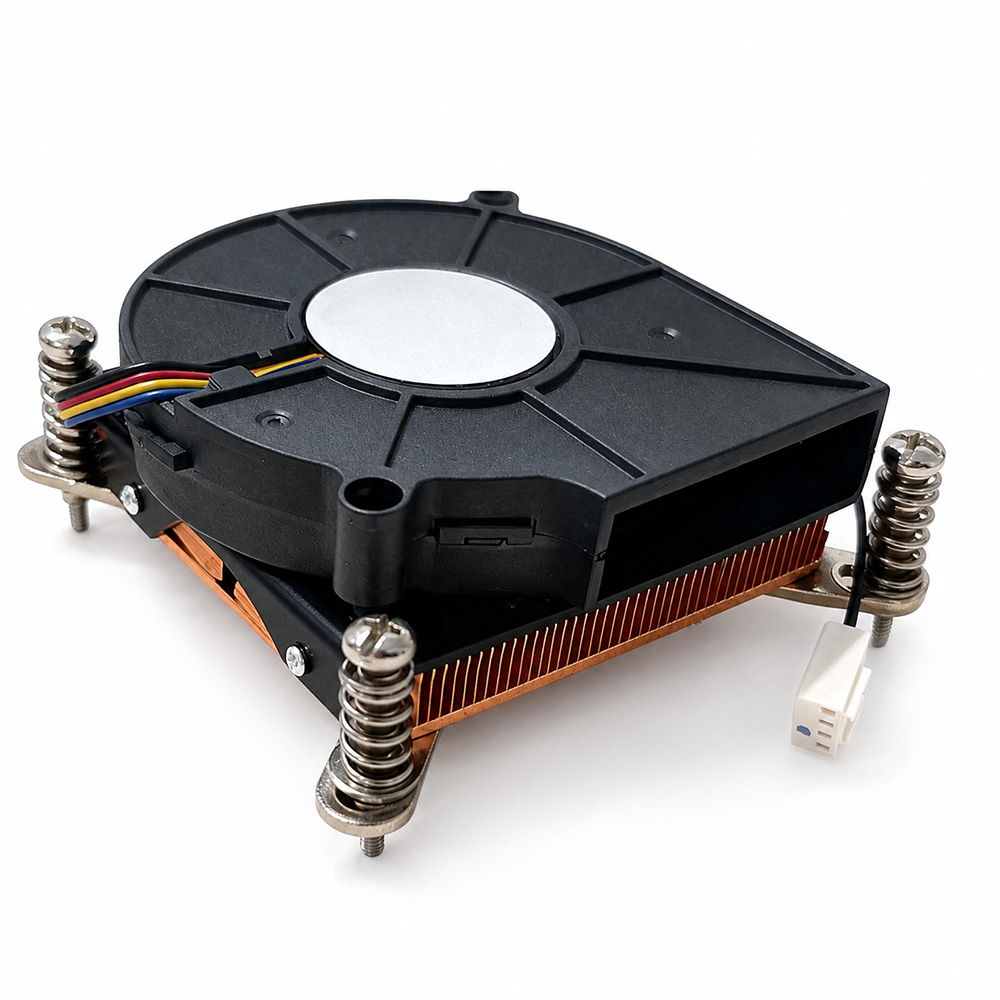

# The Role of Thermal Management in Server Performance: Spotlight on 103-0011-1 Heat Sink
In the realm of modern data centers and enterprise IT infrastructures, server performance is paramount. As businesses increasingly rely on cloud computing, big data analytics, and real-time processing, ensuring servers operate at optimal levels is critical for maintaining uptime, reliability, and efficiency. One crucial yet often underestimated aspect influencing server performance is thermal management. Proper heat dissipation not only safeguards hardware components but also enhances overall system longevity and performance consistency.
This article delves into the vital role of thermal management in server environments, with a particular focus on the 103-0011-1 heat sink—a component designed to efficiently dissipate heat and maintain ideal operating temperatures within server units.
---
## Understanding the Importance of Thermal Management in Servers
### Why Thermal Management Matters
Servers generate significant amounts of heat due to their continuous high-performance operation. Central Processing Units (CPUs), Graphics Processing Units (GPUs), memory modules, and power supplies all contribute to thermal output. Without effective heat removal strategies, these components can easily exceed safe operating temperatures, leading to throttling, errors, or even permanent damage.
Thermal management encompasses a variety of techniques and technologies aimed at controlling and dissipating heat from electronic components to:
- **Prevent Overheating:** Avoiding temperature spikes that cause thermal throttling or hardware failure.
- **Enhance Performance:** Maintaining optimal temperatures allows CPUs and other components to run at higher clock speeds without risk.
- **Increase Lifespan:** Consistent cooling reduces wear on components, preventing premature degradation.
- **Improve Energy Efficiency:** Efficient thermal systems reduce the need for excessive fan speeds or external cooling.
- **Ensure Reliability:** Stable operating conditions minimize system crashes and downtime.
### Thermal Challenges in Data Centers
Data centers face unique challenges in thermal management—such as high-density server racks, limited physical space, and energy consumption constraints. The demand for compact, powerful servers further compounds heat dissipation difficulties, making the choice of thermal solutions critical.
---
## Heat Sinks: The Cornerstone of Passive Cooling
Among the various thermal management components, **heat sinks** are fundamental passive devices designed to extract heat from semiconductor devices and dissipate it into the surrounding air.
### What is a Heat Sink?
A heat sink is typically made of thermally conductive materials like aluminum or copper. It consists of a base plate attached to the heat-generating component (such as a CPU) and a series of fins that increase surface area, enabling faster heat transfer to the air.
The efficiency of a heat sink depends on several factors:
- **Material Conductivity:** Copper offers better thermal conductivity than aluminum but is heavier and more expensive.
- **Surface Area:** More fins or optimized fin geometry increase heat dissipation.
- **Airflow:** Proper airflow around the fins is essential to carry heat away.
- **Contact Quality:** Effective thermal interface materials (TIMs) between the heat sink and component ensure minimal resistance.
---
## Spotlight on the 103-0011-1 Heat Sink
The **103-0011-1 heat sink** is a specialized thermal management solution tailored for high-performance server applications. Engineered with precision, this heat sink addresses the rigorous demands of modern server processors and components to maintain system stability and longevity.
### Design and Material Specifications
- **Material:** Typically constructed from high-grade aluminum alloy, balancing excellent thermal conductivity with lightweight properties.
- **Fin Architecture:** Features an optimized array of fins designed to maximize surface area while facilitating unimpeded airflow.
- **Base Plate:** Machined flat to ensure perfect contact with the processor or chip surface, minimizing thermal resistance.
- **Mounting Mechanism:** Incorporates secure and easy-to-install mounting hardware compatible with standard server CPU sockets.
### Thermal Performance
The 103-0011-1 heat sink excels in drawing heat away rapidly, maintaining core temperatures well below critical thresholds under peak load scenarios. Its design supports both passive and active cooling configurations, adapting to various server chassis and cooling infrastructure.
Key performance highlights include:
- **Reduced Thermal Resistance:** Efficient heat transfer ensures consistent low junction temperatures.
- **Enhanced Airflow Compatibility:** Fin arrangement complements server chassis fan configurations, improving overall cooling efficiency.
- **Durability:** Resistant to corrosion and thermal cycling, suitable for long-term deployments.
### Integration in Server Systems
The 103-0011-1 heat sink integrates seamlessly into modern server architectures, including blade servers, rack-mounted units, and high-density compute nodes. Its dimensions and mounting alignments adhere to industry standards, simplifying upgrades or replacements.
Furthermore, its compatibility with thermal interface materials and heat pipes enables hybrid cooling solutions, combining passive conduction with active fluid dynamics for extreme performance environments.
---
## Complementary Thermal Management Strategies
While the heat sink plays a pivotal role, comprehensive thermal management in servers involves additional layers:
### Active Cooling Solutions
- **Fans and Blowers:** Forced air circulation assists heat removal by increasing convection rates.
- **Liquid Cooling:** In high-performance data centers, liquid cooling systems complement heat sinks by transporting heat away more effectively.
### Environmental Controls
- **Data Center HVAC:** Precise temperature and humidity control systems stabilize ambient conditions.
- **Hot/Cold Aisle Containment:** Optimizes airflow paths to prevent mixing of hot exhaust and cold intake air.
### Thermal Monitoring and Control
Modern servers incorporate sensors and firmware that monitor temperatures in real time, adjusting fan speeds or throttling workloads to prevent overheating.
---
## Best Practices for Optimizing Thermal Management in Servers
To maximize server performance and hardware longevity, organizations should adopt a holistic approach emphasizing:
- **Regular Maintenance:** Dust accumulation impairs heat sink and fan efficiency; routine cleaning is essential.
- **Quality Thermal Interface Materials:** High-performance TIMs reduce thermal resistance between chips and heat sinks.
- **Proper Installation:** Ensuring heat sinks are correctly seated with uniform pressure avoids hotspots.
- **Environmental Monitoring:** Continuous monitoring of data center conditions enables proactive adjustments.
- **Upgrading Components:** Replacing legacy heat sinks like the 103-0011-1 with newer models if performance demands exceed capabilities.
---
## Conclusion
Thermal management remains a cornerstone of server performance optimization. The 103-0011-1 heat sink exemplifies how thoughtful engineering in heat dissipation contributes directly to maintaining operational stability, maximizing processing speeds, and extending hardware lifespan.
As data centers evolve and workloads intensify, investing in advanced thermal solutions like the 103-0011-1 heat sink ensures that servers perform reliably under demanding conditions, safeguarding business continuity and technological advancement.
---
### Technical Note: Styling Considerations in Documentation and Web Presentation
When documenting thermal management solutions or presenting product information on web platforms, attention to user experience is crucial. Implementing CSS resets, managing margins and paddings, and employing box-sizing rules ensure consistent layout across browsers. Utilizing readable font-family selections, applying background colors such as #f4f8ff for page wrappers, and setting text colors (#111) enhance clarity.
Additional styling elements like overflow-x hidden prevent horizontal scroll issues, while font smoothing (-webkit-font-smoothing) and text rendering (optimizeLegibility) improve typography quality. Structuring content in sections with appropriate padding and confining containers to max-widths (e.g., 1180px) centered with margin auto support responsiveness.
Moreover, hero sections with backgrounds (#eaf2ff), border-bottoms (#dbe7ff), and flexible hero-box layouts (display: flex) contribute to a professional and attractive presentation of technical content.
---
**Keywords:** reset, margin, padding, box-sizing, font-family, page wrapper, background color (#f4f8ff), color (#111), overflow-x hidden, font smoothing (webkit-font-smoothing), text rendering (optimizeLegibility), section padding, container max-width (1180px), container margin auto, hero background (#eaf2ff), hero border-bottom (#dbe7ff), hero-box flex d