
# Top Benefits of Using the Server Heatsink 2U 104-0046-1 in Data Centers
In the rapidly evolving world of data centers, maintaining optimal hardware performance while ensuring energy efficiency is critical. One of the pivotal components that contribute to this balance is the server heatsink. Among the various models available, the **Server Heatsink 2U 104-0046-1** has emerged as a preferred solution for many data center operators. This article explores the top benefits of using this specific heatsink model in data centers, highlighting why it stands out in terms of thermal management, reliability, and operational efficiency.
---
## Understanding the Role of Heatsinks in Data Centers
Before diving into the specifics of the Server Heatsink 2U 104-0046-1, it is important to understand the fundamental role that heatsinks play within data centers. Servers generate considerable heat due to high processing loads, and without effective cooling mechanisms, this heat can cause performance degradation or even hardware failure.
Heatsinks dissipate this heat by increasing the surface area around the chip and facilitating airflow, thereby maintaining the processor within safe operating temperatures. The design, size, material, and installation method of the heatsink significantly impact its effectiveness.
---
## Overview of the Server Heatsink 2U 104-0046-1
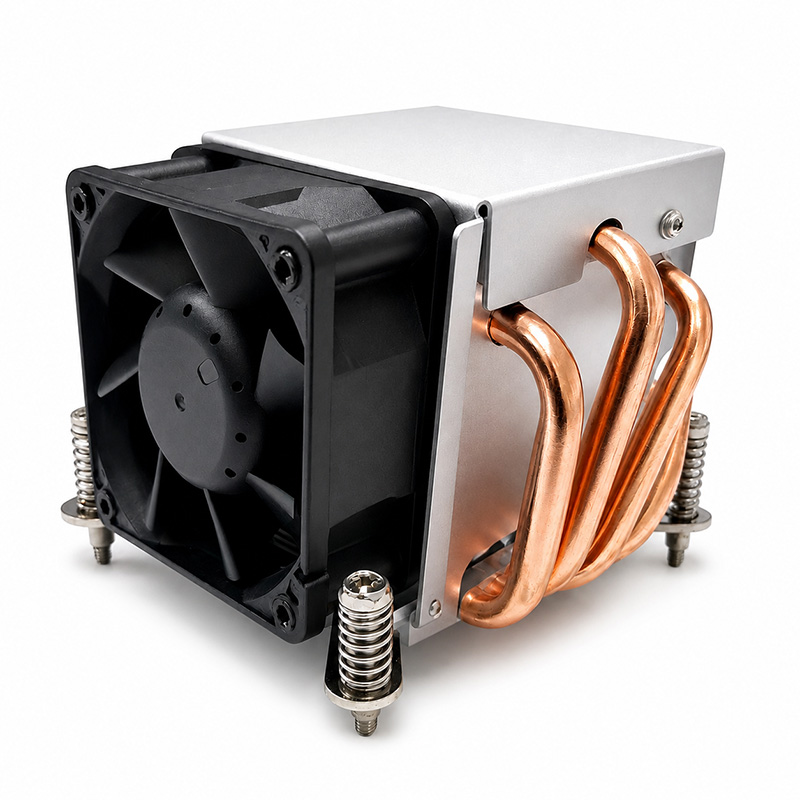
The Server Heatsink 2U 104-0046-1 is engineered specifically for 2U rack-mount servers, which are common in enterprise data centers. It is designed to fit seamlessly within the 2U chassis height, balancing efficient heat dissipation with space constraints typical of dense data center environments.
Key features include:
- Precision-engineered aluminum fins for enhanced thermal conductivity.
- Optimized fin spacing to maximize airflow without causing excessive resistance.
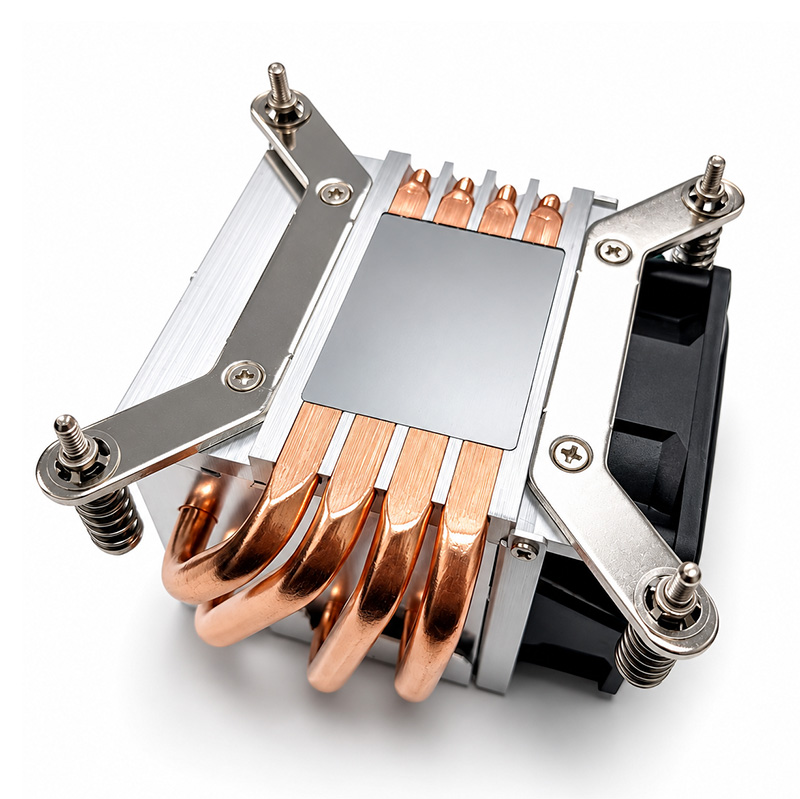
- Compatibility with standard CPU sockets and server motherboards.
- Robust build quality to ensure durability in demanding environments.
---
## Top Benefits of Using the Server Heatsink 2U 104-0046-1
### 1. **Superior Thermal Performance**
One of the primary benefits of the Server Heatsink 2U 104-0046-1 is its superior thermal management capabilities. The heatsink utilizes a carefully optimized fin design that maximizes surface area without compromising airflow. This design ensures rapid heat dissipation away from the CPU, enabling sustained high-performance computing.
Efficient heat removal reduces the risk of thermal throttling—a condition where the CPU reduces its speed to prevent overheating—thus maintaining consistent server performance under heavy workloads. This advantage is particularly crucial in data centers running intensive applications such as AI, big data analytics, and cloud services.
### 2. **Space Efficiency for Rack Optimization**
Data centers constantly seek to maximize the number of servers per rack to improve density and reduce costs. The Server Heatsink 2U 104-0046-1’s low-profile design fits perfectly within a 2U server chassis. Its compact form factor means it does not interfere with other components or obstruct airflow pathways.
By occupying minimal vertical space, this heatsink enables data center operators to deploy more servers within the same rack footprint, optimizing real estate without sacrificing cooling performance. This space efficiency is a strategic benefit for high-density data centers where every millimeter counts.
### 3. **Enhanced Reliability and Longevity**
Durability is a critical factor in data center hardware, where downtime can result in significant operational losses. The Server Heatsink 2U 104-0046-1 is manufactured from high-quality materials designed to withstand thermal cycling and mechanical stress over extended periods.
Its robust construction reduces the likelihood of physical failures such as fin deformation or solder joint fractures. Furthermore, the heatsink’s design promotes consistent temperature regulation, minimizing thermal stress on the CPU and surrounding components, thereby extending overall server lifespan.
### 4. **Energy Efficiency and Cost Savings**
Effective cooling solutions contribute directly to energy efficiency in data centers. The Server Heatsink 2U 104-0046-1 achieves excellent thermal performance without relying heavily on additional active cooling (e.g., high-speed fans), which consume more power.
By improving passive heat dissipation, this heatsink helps reduce the load on cooling infrastructure, lowering electricity consumption and operational expenses. Over time, these savings can be substantial, making it an economically attractive option for large-scale deployments.
### 5. **Ease of Installation and Maintenance**
The Server Heatsink 2U 104-0046-1 is designed with user-friendly mounting mechanisms compatible with industry-standard sockets and motherboard layouts. This compatibility simplifies installation and replacement processes, reducing labor time and minimizing the risk of damage during servicing.
Additionally, the heatsink’s structural design allows for straightforward cleaning and inspection, facilitating routine maintenance that is essential to sustain optimal thermal performance and prolong equipment life.
### 6. **Compatibility with Modern Server Architectures**
Modern servers often incorporate multi-core CPUs and advanced chipsets that generate variable heat loads. The Server Heatsink 2U 104-0046-1 is engineered to accommodate such architectures, providing consistent cooling across different CPU models and performance tiers.
This flexibility makes it a versatile choice for data centers deploying heterogeneous server fleets or upgrading their hardware over time without needing to redesign cooling infrastructures.
---
## Integrating the Server Heatsink 2U 104-0046-1 into Data Center Infrastructure
### Optimizing Airflow and Thermal Zones
To maximize the benefits of the Server Heatsink 2U 104-0046-1, it is crucial to consider the overall airflow strategy within the data center. Properly designed hot and cold aisles, along with controlled environmental parameters such as humidity and temperature, amplify the heatsink’s ability to maintain ideal CPU temperatures.
Leveraging metrics such as **box-sizing**, **margin**, and **padding** in server rack layouts can facilitate better airflow pathways, preventing hotspots and ensuring uniform cooling distribution.
### Leveraging CSS Analogies in Thermal Management
While CSS properties like **font-family**, **background color**, and **text color** pertain to web design, they metaphorically reflect the precision and customization needed in data center thermal management. Just as CSS allows for fine-tuning visual elements to enhance readability and aesthetics, selecting the right heatsink and configuring its environment require meticulous adjustments to optimize thermal performance.
For example, akin to setting **overflow-x** to control horizontal overflow in web content, data center engineers manage airflow overflow using containment strategies and physical barriers to prevent mixing of hot and cold air streams.
---
## Conclusion
The Server Heatsink 2U 104-0046-1 offers multiple compelling benefits for data centers seeking reliable, efficient, and scalable cooling solutions. Its combination of superior thermal performance, space efficiency, durability, and ease of maintenance makes it an ideal component for modern server environments.
By integrating this heatsink into their infrastructure, data center operators can achieve enhanced server reliability, reduced energy consumption, and optimized rack density—all critical factors in today’s competitive and fast-paced digital landscape.
For organizations looking to future-proof their data centers, investing in quality thermal management hardware like the Server Heatsink 2U 104-0046-1 is a strategic decision that delivers measurable returns in performance and cost-efficiency.
---
**Keywords:** reset, margin, padding, box-sizing, font-family, page wrapper, background color, text color, overflow-x, font smoothing, text rendering, section, container, max-width, margin auto, hero, background color, border-bottom, flex display, flex-wrap, align-items, gap, hero-title, font-size, line-